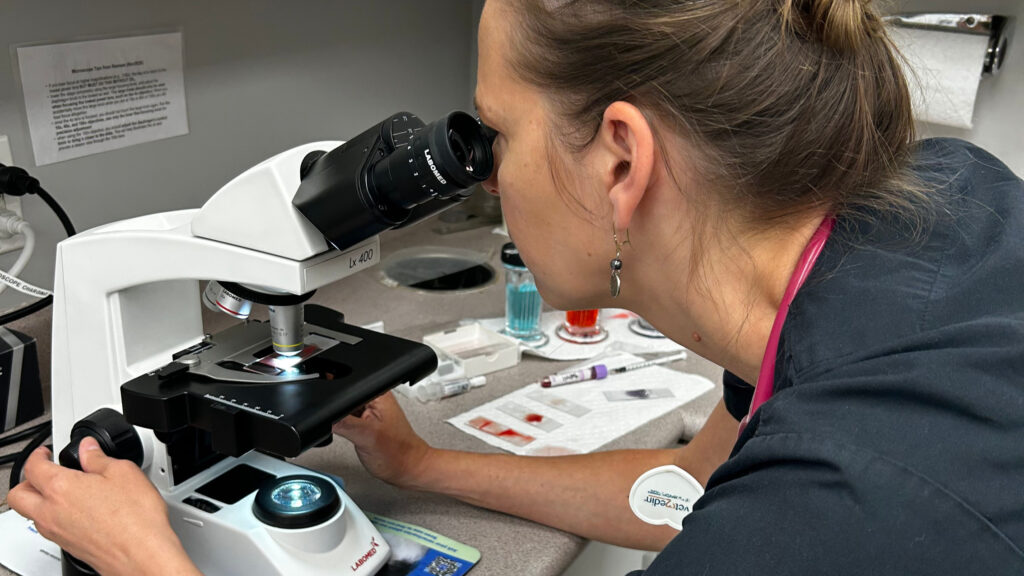
How do you approach an anemic patient, interpret the laboratory findings, and ultimately identify the underlying cause?
In this practical, interactive webinar, we take a step-by-step approach to the diagnostic work-up of anemia in dogs and cats, with a strong emphasis on clinical reasoning, laboratory interpretation, and particularly the interpretation of blood smears.
We begin with a challenging clinical case involving an anemic cat. Through a series of interactive questions, participants are encouraged to interpret the available findings, consider possible differential diagnoses, and decide which diagnostic steps to take next. This case also provides the starting point for an in-depth discussion of immune-mediated hemolytic anemia (IMHA).
From there, we explore a structured approach to anemia by asking the key questions that help narrow down the differential diagnoses:
- How severe is the anemia? What can the degree of anemia tell us about the patient’s condition?
- How quickly did the anemia develop? How does the distinction between acute and chronic anemia influence our interpretation?
- Is the anemia regenerative or non-regenerative? What does the bone marrow response tell us about the underlying process?
- What can we learn from the red blood cell indices? How can MCV, MCHC, and other hematological parameters guide our diagnostic reasoning?
- What does the blood smear reveal? How can red blood cell morphology and other microscopic findings provide essential diagnostic clues?
- Are there additional hematological abnormalities? How can changes in white blood cells, platelets, and other laboratory parameters help us identify the underlying cause?
A major focus: In-depth blood smear interpretation
A big part of this webinar is dedicated to the practical interpretation of blood smears. We go well beyond simply recognizing abnormal red blood cell shapes. Participants will learn how to approach a blood smear systematically, identify and interpret important morphological abnormalities, and understand their diagnostic significance in the context of anemia.
Using numerous real clinical examples and blood smear images, we explore how erythrocyte morphology, signs of regeneration, features suggestive of hemolysis, and abnormalities involving other blood cell populations can help distinguish between different causes of anemia.
The emphasis is on what you actually see under the microscope, what those findings mean, and how to use them in clinical decision-making. We also discuss how blood smear findings complement automated hematology results and why manual smear evaluation remains such an important part of a complete hematological assessment.
Throughout the webinar, multiple clinical cases and practical examples help connect laboratory findings with clinical presentation, demonstrating how each piece of information contributes to the diagnostic process.
The goal is not simply to recognize anemia, but to understand what is causing it. By the end of this webinar, participants will have a practical, systematic approach to investigating anemia, a deeper understanding of blood smear interpretation, and greater confidence in interpreting hematological results in everyday clinical practice.