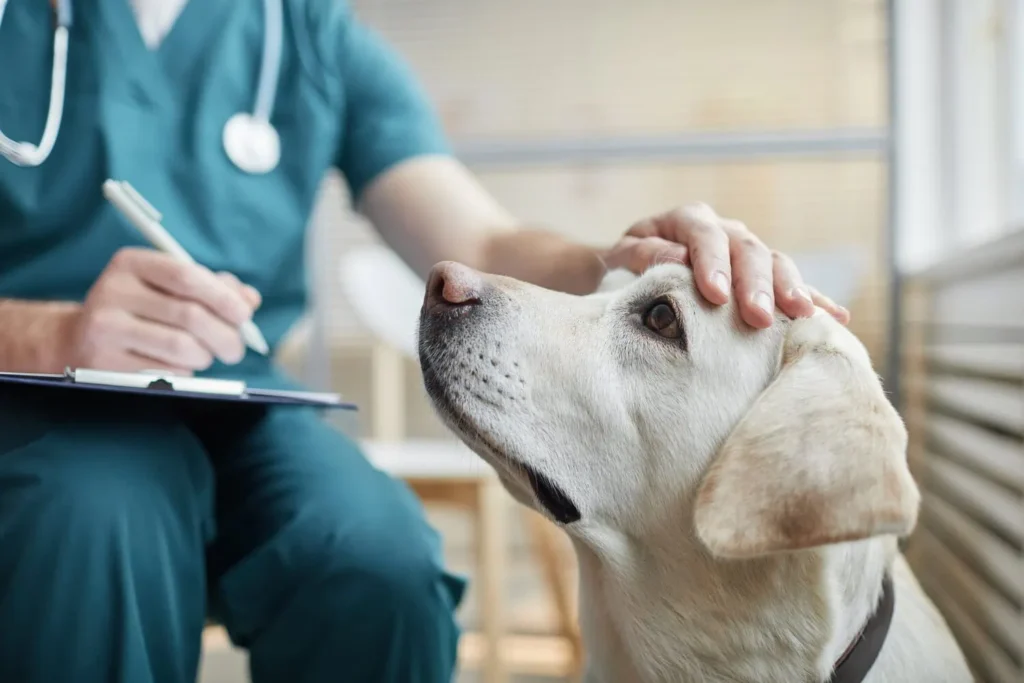
The OVT starter/refresher training program is a one-year, fully self-paced online program. It is designed to provide solid all-round knowledge and gives participants a strong foundation across most disciplines of small animal medicine. The program is aimed at both early-career and experienced veterinarians who are looking for a solid base or a thorough refresher. It is also suitable for veterinarians who wish to transition from another field into companion animal practice.
The program consists of 10 modules, each covering a different subject area, with a total of approximately 70 hours of learning material spread over one year. The training program is accredited for 50 RACE continuing education credits. The modules open one by one in a predetermined order, with approximately four to six weeks between the opening of each module. Each module remains accessible for two months before closing.
As the program is fully self-paced online, you can enroll at any time. The program is now open. You can start immediately and complete the training at your own pace over one year. Questions for the instructors can always be submitted via email.
This program is suitable for both new veterinarians who need a solid foundation and more experienced veterinarians who require a thorough refresher. It is also ideal for veterinarians who have completed their degrees in a field other than companion animals and wish to transition to companion animal medicine, as well as for those who have been working in a non-clinical setting for several years and want to return to clinical practice.
The aim of this program is to provide a comprehensive and solid foundation across the diverse disciplines within small animal medicine, ultimately helping you gain more confidence in your clinical decision-making.
The modules offer a variety of online webinars, articles, assessments, protocols and step plans, clinical cases and interesting documents. This keeps it fun and varied!
You complete the training program entirely independently online. You should expect that completing the full program will take minimally 70 hours (on average 7 to 12 hours per module). The program is accredited for 50 RACE continuing education credits.
The program consists of 10 modules, each covering a different subject area. The modules open one by one in a predetermined order, with approximately four to six weeks between the opening of each module. Each module remains accessible for two months before closing. This creates an overlap period during which you can still access the previous module after the next one has opened.
Once a module closes, you will no longer have access to its webinars, clinical cases or other materials. It is therefore important to complete each module and download any materials you wish to keep before the closing date.
Participants may submit questions to instructors by email during the course.
The training program is accredited for 50 RACE continuing education credits.
But more importantly: by the end of the program, you will be fully up to date and feel significantly more confident across a wide range of veterinary topics!
The training program is now available, and you can enroll and start immediately. The program is fully self-paced, allowing you to complete all modules at your own pace over a period of one year. Questions for the instructors can be submitted via email at any time.
This module begins with a strong focus on the responsible, evidence-based use of antibiotics in small animal practice.
Antibiotics are essential in the treatment of many bacterial infections and remain one of the most important tools available to veterinarians. At the same time, their effectiveness is increasingly threatened by antimicrobial resistance. Inappropriate prescribing, unnecessary treatment, incorrect drug selection, and excessively long treatment courses can all contribute to the development and spread of resistant bacteria. For this reason, prudent antibiotic use is a key responsibility in both veterinary and human medicine.
Throughout this module, you will learn how to make more rational and clinically sound decisions when antimicrobial treatment is being considered. The emphasis is not only on which antibiotic to choose, but also on whether an antibiotic is indicated at all, when diagnostic testing such as culture and susceptibility testing is appropriate, and how treatment duration can be optimized.
In this module, you will learn:
The second part of the module focuses on a selection of important infectious diseases commonly encountered in cats such as FIV, FeLV, and FIP. You will review their transmission, clinical presentation, diagnostic approach, interpretation of laboratory tests, and the practical implications of a positive test result.
By the end of the module, you should feel more confident in making evidence-based decisions about antimicrobial therapy and in approaching several of the most relevant infectious diseases encountered in small animal practice.
The following materials are included:
Sedation and anesthesia are often necessary to perform surgical procedures and other interventions. Even in healthy animals, there is always a risk of complications—or even mortality. This can be concerning for both owners and veterinary professionals.
In this module, we first focus on general anesthesia. You will learn about the risks associated with anesthesia in both healthy and compromised patients, and how to prepare effectively to minimize the risk of complications.
The following potential complications are discussed:
You will learn how to recognize these complications, understand their underlying causes, and manage them appropriately. Common arrhythmias and the approach to cardiopulmonary arrest are also covered. In addition, anesthesia protocols for a variety of emergency situations are discussed through clinical case examples. A dedicated webinar further explores anesthesia in emergency settings using specific cases.
The second part of this module focuses on pain management, an essential component of high-quality veterinary care. Effective analgesia not only improves patient welfare but also makes procedures more manageable for both the veterinary team and the owner.
You will learn:
Although the emphasis is on pharmacological treatment (both systemic and local), physical methods of acute pain management are also discussed.
The following materials are included:
Whether you are a recent graduate or have years of experience, managing a critically ill dog or cat is always a challenging and sometimes stressful situation.
In this module, we first focus on appropriate fluid therapy. Through a webinar based on clinical cases, you will learn how to select the right type of fluid and determine the correct volume and rate of administration.
In addition, a webinar on CPR (cardiopulmonary resuscitation) is included.
You will also be provided with practical tools to confidently manage the following emergency situations:
Finally, a short webinar will introduce you to the basics of POCUS (point-of-care ultrasound).
The following materials are included:
Whether you are a recent graduate or have years of experience, dealing with a critically ill dog or cat is always challenging and can be stressful.
You will first be provided with practical step-by-step approaches for the diagnosis and treatment of animals with the following conditions:
Next, you will receive a solid foundation and practical tips for performing intestinal surgery in dogs and cats. Which techniques are recommended, and what should be avoided?
In addition, this module will provide you with the tools to confidently manage the following situations:
The following materials are included:
Blood and urine tests are part of our daily routine in practice and can provide a wealth of valuable information. Through clinical cases, we will systematically explore how to interpret and make the most of the information obtained from these tests. This module covers the following:
The following materials are included:
Blood and urine tests are part of our daily routine in practice and can provide a wealth of valuable information. Through clinical cases, we will systematically explore how to interpret and make the most of the information obtained from these tests. This module will focus first on the electrolytes, with detailled discusion on sodium, chloride, potassium, phosphorus and calcium abnormalities.
In addition, this module will focus on cytology and provide you with the necessary tools to independently evaluate cytological samples. This will be supported by images of cytological preparations. We will discuss the different types of abnormalities that can be identified on cytology (inflammation versus neoplasia) and how to distinguish between them in a practical and straightforward way.
Furthermore, we will explore how to differentiate between benign and malignant processes. We will also cover a systematic approach to working up patients with effusions (thoracic and abdominal), based on cytology and additional tests that can be performed on the fluid.
The following materials are included:
This module focuses on diagnostic imaging and neurology. We start with two online webinars on the practical interpretation of radiographs in dogs and cats presenting with acute dyspnea (thorax) and acute vomiting (abdomen).
Because practice is key, carefully selected case examples will help you recognize disease patterns, deepen your understanding, and avoid common pitfalls. Through interactive cases, you will gain practical tools to confidently interpret radiographs in daily practice—where subtle abnormalities can easily be overlooked, especially in a busy clinical setting.
The focus then shifts to neurology. Based on a thorough neurological examination, it is possible not only to determine whether a problem is neurological, but also to accurately localize the lesion within the nervous system. Using numerous videos, the different types of ataxia and paresis are explained, as well as how to distinguish between them. The cranial nerve examination, panniculus reflex, anal reflex, and more are also discussed and demonstrated through video examples. You will therefore receive all the necessary tools to confidently perform a complete neurological examination. We’ll conclude with a webinar on epilepsy.
The following materials are included:
This module provides a solid and practical foundation in cardiology and dermatology in dogs and cats. The focus is on conditions you are most likely to encounter in daily practice, with an emphasis on recognition, diagnostics, and treatment.
In the cardiology part of this module, both acquired and congenital heart diseases are covered. You will learn how to approach cardiac patients in a structured and confident way, from clinical presentation to diagnosis and management. The following conditions are discussed:
In addition, you will learn the basics of ECG interpretation in dogs and cats through practical case examples.
The second part of this module focuses on dermatology, one of the most common and sometimes challenging areas in small animal practice. You will gain practical insights and tools to approach dermatological cases in a structured and efficient way. The following topics are covered:
By the end of this module, you will feel more confident in recognizing, diagnosing, and managing both cardiac and dermatological conditions in everyday clinical practice.
The following materials are included:
Lameness in dogs and cats is a common presentation in daily practice. To reach an accurate diagnosis, it is essential to perform a thorough and systematic orthopedic examination. This module focuses on the orthopedic examination and provides practical guidance to help you approach lameness cases in a structured and confident way.
You will also gain insight into the most common orthopedic conditions in dogs, helping you better recognize and manage these cases in daily practice.
In addition, a webinar is included on the interpretation of joint radiographs, based on clinical cases, to further support your diagnostic approach.
Following the orthopedics section, the module continues with a practical webinar covering the fundamentals of surgery, before exploring wound assessment and wound management in greater depth.
You will learn:
These concepts are illustrated using clinical cases, helping you translate theory into daily practice.
The module also addresses brachycephalic obstructive airway syndrome (BOAS). You will learn about:
By the end of this module, you will have practical tools to confidently manage orthopedic cases, wounds, and BOS in daily practice.
The following materials are included:
We conclude the learning trajectory with internal medicine. As this is a very broad field, it is not possible to cover it in full within a 6-week module. For veterinarians with a particular interest in this area, we recommend our separate ‘Internal Medicine’ learning trajectories.
This module focuses on a selection of common and clinically relevant internal medicine topics, all presented through webinars. The following subjects are covered:
In addition to the webinars, the module is supplemented with clinical cases that you can work through independently, practical protocols, and engaging reading materials to support and deepen your understanding.
The following materials are inlcuded:
Deborah is a Diplomate of the European College of Veterinary Surgeons (ECVS) with a clinical focus on small animal surgery and surgical oncology. She studied veterinary medicine at the University of Bern, where she obtained her Master of Veterinary Medicine and completed her doctoral degree (Dr. med. vet.) in 2015.
After a rotating internship at the Small Animal Clinic of the University of Bern, Deborah gained further experience in private practice before returning to the university to complete an ECVS residency in small animal surgery. As part of her specialist training, she undertook an externship and later a fellowship in surgical oncology at the University of Florida, where she received ACVS fellowship training in surgical oncology.
Since September 2020, Deborah has been working as a senior surgeon in the Small Animal Surgery Department of the Small Animal Clinic at the University of Bern. Her work combines advanced clinical surgery with teaching and the supervision of interns and residents, with a particular interest in oncologic surgery.
Deborah ist Diplomate des European College of Veterinary Surgeons (ECVS) und spezialisiert auf die Chirurgie bei Kleintieren mit besonderem Schwerpunkt auf der chirurgischen Onkologie. Sie studierte Tiermedizin an der Universität Bern, wo sie den Masterabschluss erlangte und 2015 ihre Promotion (Dr. med. vet.) abschloss.
Nach einem rotierenden Internship an der Kleintierklinik der Universität Bern sammelte Deborah weitere klinische Erfahrung in der Privatpraxis, bevor sie an die Universität zurückkehrte, um eine Residency des European College of Veterinary Surgery (ECVS) in der Kleintierchirurgie zu absolvieren. Im Rahmen dieser Weiterbildung absolvierte sie sowohl ein Externship als auch ein Fellowship in chirurgischer Onkologie an der University of Florida und erhielt dort eine ACVS Fellowship-Ausbildung in Surgical Oncology.
Seit September 2020 ist Deborah als Oberärztin in der Abteilung für Kleintierchirurgie der Kleintierklinik der Universität Bern tätig. Ihre Arbeit umfasst die spezialisierte chirurgische Versorgung von Patienten sowie Lehr- und Betreuungstätigkeiten, mit einem besonderen Interesse an der chirurgischen Onkologie.
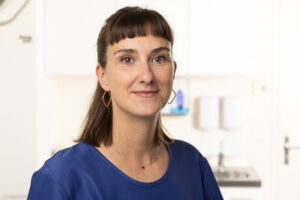
Emmelie Stock graduated as a veterinarian in 2012 from the Faculty of Veterinary Medicine at Ghent University. She subsequently completed an internship and residency in diagnostic imaging. During her residency, she successfully completed a PhD research project entitled: “The evaluation of kidney function in cats using non-invasive functional imaging.”
In 2019, she obtained the title of Diplomate of the European College of Veterinary Diagnostic Imaging (ECVDI). Afterwards, she worked for several years as Head of the Diagnostic Imaging Department at the Faculty of Veterinary Medicine of Ghent University.
Currently, Emmelie works for Evidensia Belgium and France. She is active at Anima+ in De Pinte and Oncovet in Villeneuve-d’Ascq, and is also affiliated with VetCT for teleradiology services.
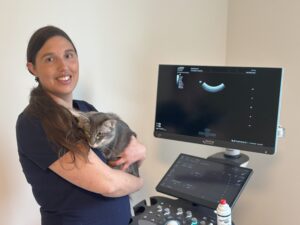
Dr. Meyer graduated from the University of Bern, Switzerland in 2010. After completing a doctorate thesis at the Institute of Genetics at the same university, she went on to work in a small animal clinic for 2 years, followed by an internship in Small Animal Internal Medicine at the University of Zurich. After several years working in general practice and emergency medicine in Switzerland and the UK, she pursued residency training in emergency and critical care at the University of Bern and Washington State University. Dr. Meyer became a diplomate in Small Animal Emergency and Critical Care in 2022 and joined the University of Zurich as a senior lecturer the same year.
Franzi has a genuine passion for teaching and takes great joy in guiding residents through the challenges of emergency and critical care. She creates a relaxed and supportive atmosphere where no question is too small and encourages learners to speak up and think critically. Her approachable manner makes her a mentor who is always happy to explain complex concepts in a clear, straightforward way. Whether in the lecture hall or the clinic, Franzi’s enthusiasm for education shines through, inspiring the next generation of critical care specialists.
Dr. Meyer schloss ihr Studium der Tiermedizin 2010 an der Universität Bern (Schweiz) ab. Nach dem Abschluss ihrer Doktorarbeit am Institut für Genetik derselben Universität arbeitete sie zwei Jahre in einer Kleintierklinik, gefolgt von einem Internship in der Kleintier-Inneren Medizin an der Universität Zürich. Nach mehreren Jahren Tätigkeit in der Allgemeinpraxis und in der Notfallmedizin in der Schweiz und im Vereinigten Königreich absolvierte sie eine Residency in Notfall- und Intensivmedizin an der Universität Bern sowie an der Washington State University. Im Jahr 2022 erlangte Dr. Meyer den Titel Diplomate in Small Animal Emergency and Critical Care und trat im selben Jahr eine Stelle als Senior Lecturer an der Universität Zürich an.
Franzi hat eine große Freude am Unterrichten und begleitet Resident:innen gerne durch die Herausforderungen der Notfall- und Intensivmedizin. Sie schafft eine offene und unterstützende Lernatmosphäre, in der jede Frage willkommen ist, und ermutigt dazu, aktiv mitzudenken und kritisch zu hinterfragen. Durch ihre zugängliche Art gelingt es ihr, auch komplexe Inhalte klar und verständlich zu vermitteln. Sowohl im Hörsaal als auch in der Klinik ist ihr Engagement für die Ausbildung deutlich spürbar und motiviert angehende Spezialist:innen in der Intensivmedizin.
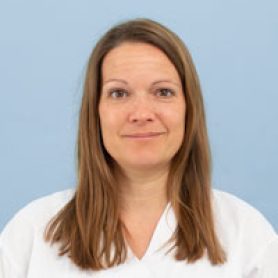
After graduating as a veterinarian in 2006 from the University of Ghent, Geert completed an internship and residency in small animal internal medicine. She remained at the university until 2012, after which she moved to Western Canada. There, she spent several years working in first-line practice, before transitioning back into emergency and referral medicine. This experience gave her a deep understanding of the realities of clinical practice and a strong appreciation for the challenges faced by general practitioners on a daily basis.
Geert has been a Diplomate of the European College of Veterinary Internal Medicine (ECVIM-CA) since 2017 and is (co-)author of several scientific publications. She has more than 15 years of experience in referral practice, including extensive experience in small animal internal medicine, emergency care, and teleconsulting.
However, what truly sets Geert apart is her passion for teaching. She is known for her ability to explain complex topics in a clear, accessible, and practical way, making internal medicine understandable for every veterinarian—regardless of their level of experience. Her teaching style is characterized by clear explanations, additional context, and a strong focus on clinical reasoning.
Having worked in first-line practice herself, Geert strongly believes that the “ideal scenario” is not always achievable. Her goal is not only to teach what the gold standard (Plan A) looks like, but also to equip veterinarians with the tools and confidence to make well-reasoned decisions when they need to rely on Plan B or Plan C.
Her courses are highly valued for their practical approach and direct applicability in daily practice, and her enthusiasm for internal medicine is contagious—she consistently succeeds in inspiring others to develop the same passion.
Driven by this vision, Geert founded OnlineVetTraining (OVT) in 2019, with the aim of providing accessible, high-quality, and clinically relevant education for veterinarians and veterinary professionals worldwide.
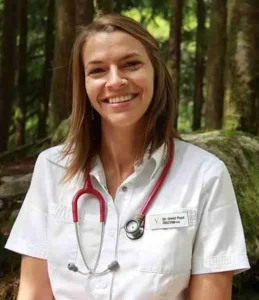
Ine Cornelis graduated as a veterinarian in 2008 from the Faculty of Veterinary Medicine (University of Ghent). She then followed a one-year rotating internship at the Department of Small Animals (Faculty of Veterinary Medicine) in Merelbeke.
In October 2009, Ine started her residency in neurology, which she successfully completed in 2014 with her European specialist diploma (Diplomate of the European College of Veterinary Neurology). At the same time, she also started a doctoral research on the diagnosis, treatment and prognosis of meningoencephalomyelitis of unknown origin in dogs.
From November 2014 to November 2015, she worked as a Staff Clinician in Neurology and Neurosurgery at the Royal Veterinary College in London.
After returning to the Faculty of Veterinary Medicine (Ghent University) at the end of 2015, Ine continued working on her PhD, which she successfully defended in April 2017. Since then, Ine has been working as a neurology specialist at the Small Animal Clinic (Faculty of Veterinary Medicine, Ghent University).
Joachim Proot (ECVS diplomate) graduated as a veterinarian from the University of Ghent in 2001. After graduating, he did an internship in Canada and then worked in England for five years. After obtaining his Certificate in Small Animal Surgery; in 2006 he started working in a secondary care clinic in the United Kingdom and followed his ECVS specialization training there.
Joachim currently works as a soft tissue surgeon at Dierenziekenhuis Barendrecht (Netherlands) and also works as a passionate teacher for the Evidensia Academy (Netherlands). Joachim's interest lies in soft tissue surgery, but in his specialization trajectory he also gained extensive experience in orthopedics and neurosurgery.
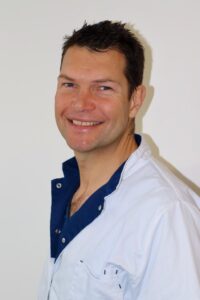
Laura Udraite Vovk graduated in Veterinary Medicine in 1999 from the Lithuanian University of Health Sciences. She worked for more than ten years in general practice, deepening her expertise and gaining valuable experience through observerships in referral clinics in Switzerland, Sweden, and Canada, as well as by attending numerous international congresses and continuing education events, mainly in the fields of endocrinology, dermatology, and reproductive medicine.
She founded and managed one of the largest private veterinary clinics in Vilnius, Lithuania, in which she remains a co-owner to this day.
In 2016, Laura began her specialist training in veterinary dermatology at Ludwig Maximilian University of Munich, under the supervision of her mentors Professor Dr. Ralf Müller and Dr. Sonya Bettenay. In 2020, she successfully passed the board examinations of both the European College of Veterinary Dermatology (ECVD) and the American College of Veterinary Dermatology (ACVD), becoming the first board-certified veterinary dermatologist in Lithuania.
Currently, Laura heads the Dermatology Department of the Teaching Hospital at Ludwig Maximilian University of Munich, works as a telemedicine consultant for private veterinary clinics, and serves as a guest lecturer at the Lithuanian University of Health Sciences. She is actively involved in the European College of Veterinary Dermatology, is a member of the ECVD Examination Committee, and mentors two ECVD/ACVD residents.
Laura is the author and co-author of numerous scientific publications in international peer-reviewed journals. She regularly lectures at national and international continuing education events and congresses in veterinary dermatology and gives presentations in Lithuanian, English, and German.
Laura Udraite Vovk schloss im Jahr 1999 ihr Studium der Veterinärmedizin an der Litauischen Universität der Gesundheitswissenschaften ab. Sie arbeitete über zehn Jahre in der Allgemeinpraxis, vertiefte ihr Fachwissen und sammelte wertvolle Erfahrung durch Hospitationen in Überweisungskliniken in der Schweiz, Schweden und Kanada sowie durch die Teilnahme an zahlreichen internationalen Kongressen und Fortbildungsveranstaltungen, vor allem in den Bereichen Endokrinologie, Dermatologie und Reproduktionsmedizin.
Sie gründete und leitete eine der größten privaten Tierkliniken in Vilnius, Litauen, an der sie bis heute als Mitinhaberin beteiligt ist.
Im Jahr 2016 begann Laura ihre Weiterbildung zur Fachtierärztin für Veterinärdermatologie an der Ludwig-Maximilians-Universität München unter der Anleitung ihrer Mentoren Professor Dr. Ralf Müller und Dr. Sonya Bettenay. Im Jahr 2020 bestand sie erfolgreich die Fachprüfungen des European College of Veterinary Dermatology (ECVD) sowie des American College of Veterinary Dermatology (ACVD) und wurde damit die erste board-zertifizierte Dermatologin in Litauen.
Derzeit leitet Laura die dermatologische Abteilung des Lehrkrankenhauses der Ludwig-Maximilians-Universität München, arbeitet als Telemedizin-Konsultantin für private Tierkliniken und ist als Gastdozentin an der Litauischen Universität der Gesundheitswissenschaften tätig. Sie engagiert sich aktiv im European College of Veterinary Dermatology, ist Mitglied der ECVD-Prüfungskommission und Mentorin von zwei ECVD/ACVD-Residenten.
Laura ist Autorin und Mitautorin zahlreicher wissenschaftlicher Publikationen in internationalen peer-reviewten Fachjournalen. Sie referiert regelmäßig auf nationalen und internationalen Fortbildungsveranstaltungen und Kongressen im Bereich der Veterinärdermatologie und hält Vorträge in litauischer, englischer und deutscher Sprache.

Pascale obtained the degree of Veterinarian at Ghent University in 2006. Immediately afterwards, she followed a rotating internship in small animal medicine at the Department of Medicine and Clinical Biology of Small Animals. Fascinated by the possibilities that scientific research can offer for the clinic, she started a doctoral study in Internal Medicine on kidney function in dogs with Cushing's syndrome. Gradually, her interest shifted from Internal Medicine to Cardiology and after completing her PhD in 2011, she started a residency at the European College of Veterinary Internal Medicine (ECVIM), subspecializing in Cardiology. During this training, she worked for 1 year in Internal Medicine, at the University of Ghent and 2.5 years in Cardiology at the Universities of Munich, Germany and Zurich, Switzerland. In 2015, she obtained the Diploma of European Specialist in Cardiology (DipECVIM-ca Cardiology). Since October 2016, she has been working as head of the Cardiology Department of the Department of Small Animals at the University of Ghent (Belgium). In October 2017, she was appointed Professor of Cardiology and, together with her enthusiastic team, she is responsible for education, consultations and scientific research in small animal cardiology at the University of Ghent (Belgium).
Pascale erlangte 2006 den Abschluss als Tierärztin an der Universität Gent. Unmittelbar danach absolvierte sie ein rotierendes Internship in der Kleintiermedizin am Fachbereich für Innere Medizin und Klinische Biologie der Kleintiere. Fasziniert von den Möglichkeiten, die wissenschaftliche Forschung für die klinische Praxis bietet, begann sie eine Doktorarbeit in der Inneren Medizin zum Thema Nierenfunktion bei Hunden mit Cushing-Syndrom. Im Laufe der Zeit verlagerte sich ihr Interesse von der Inneren Medizin zur Kardiologie, und nach Abschluss ihrer Promotion im Jahr 2011 begann sie eine Residency am European College of Veterinary Internal Medicine (ECVIM) mit Schwerpunkt Kardiologie.
Im Rahmen dieser Weiterbildung arbeitete sie ein Jahr in der Inneren Medizin an der Universität Gent sowie zweieinhalb Jahre in der Kardiologie an den Universitäten München (Deutschland) und Zürich (Schweiz). Im Jahr 2015 erlangte sie den Titel einer Europäischen Spezialistin für Kardiologie (DipECVIM-ca Kardiologie). Seit Oktober 2016 ist sie Leiterin der Kardiologieabteilung der Abteilung für Kleintiere an der Universität Gent (Belgien). Im Oktober 2017 wurde sie zur Professorin für Kardiologie ernannt und ist gemeinsam mit ihrem engagierten Team für Lehre, Konsultationen und wissenschaftliche Forschung im Bereich der Kleintierkardiologie an der Universität Gent verantwortlich.
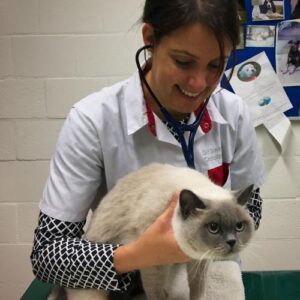
Urszula Bartoszuk graduated from Warsaw University of Life Sciences in Poland where a few years later obtained as well her PhD degree.
Dr. Urszula Bartoszuk performed her Residency Programme at the University of Zurich in Switzerland. After completion of the residency program in 2017, she took up the role of senior medical assistant in small animal cardiology at the University of Zurich.
From 2019 until 2021, Dr. Urszula Bartoszuk was senior lecturer in the Department of Small Animals Cardiology at the Small Animals Teaching Hospital, University of Liverpool, UK. Thereafter she moved to Hong Kong, where she is working until now in a multidisciplinary referral hospital leading a cardiology department.
Yi completed her veterinary studies and internship in 2013 at the University of Ghent and obtained her specialization in Internal Medicine in 2019 at the University of Giessen (Germany). She subsequently worked as a clinical supervisor in the Department of Internal Medicine at the University of Giessen.
Yi has built an extensive academic career across several renowned university hospitals, including Ghent, Utrecht, and Bern, where she worked as a specialist in Internal Medicine. In 2022, she expanded her clinical experience by working for a year at one of the largest private referral clinics in Hong Kong, gaining valuable insight into veterinary practice outside the academic setting.
Since 2023, Yi has been working internationally as an online consultant for primary care veterinarians, supporting them with challenging internal medicine cases, while also contributing as a lecturer in various educational programs. She remains clinically active through locum work in practices around the world and is involved in volunteer work at local animal shelters.
Yi is deeply passionate about teaching. She is often described as a “walking encyclopedia,” with an exceptional depth and breadth of knowledge. What truly sets her apart, however, is her ability to translate this knowledge into clear, structured, and understandable explanations, making even complex internal medicine topics accessible for veterinarians at all levels.
Her goal is to provide veterinarians with the tools, knowledge, and confidence to independently approach and solve internal medicine cases in daily practice. Thanks to her experience in multiple university hospitals and private clinics across different countries, Yi has developed a strong awareness of how case presentation, disease prevalence, and availability of diagnostics and treatments can vary depending on the setting. This allows her to bring a highly practical, flexible, and globally relevant perspective to her teaching.
Exploring new environments, learning from international experts, and experiencing different cultures have always been central to her personal and professional growth. She continues this journey together with her partner, their cat Nidalee, and their adventurous dog Harper.
Yi schloss 2013 ihr Studium der Tiermedizin sowie ihr Internship an der Universität Gent ab und erlangte 2019 ihre Spezialisierung in der Inneren Medizin in Gießen (Deutschland). Anschließend arbeitete sie als klinische Supervisorin in der Abteilung für Innere Medizin an der Universität Gießen.
Yi baute eine umfangreiche akademische Laufbahn an verschiedenen Universitätskliniken auf. Sie hatte die Möglichkeit, mit renommierten Professorinnen und Professoren ihres Fachgebiets an den Universitäten Gent, Utrecht und Bern zusammenzuarbeiten, jeweils in der Funktion als Spezialistin für Innere Medizin. Im Jahr 2022 arbeitete sie ein Jahr lang in der größten privaten Tierklinik in Hongkong, wo sie wertvolle Einblicke in die Arbeit außerhalb des universitären Umfelds gewann.
Das Erkunden neuer Umgebungen, das Lernen von und Arbeiten mit unterschiedlichen Expertinnen und Experten sowie das Erleben neuer Kulturen waren stets zentrale Elemente ihrer persönlichen Entwicklung. Aus diesem Grund entschied sie sich, gemeinsam mit ihrem Partner, ihrer Katze Nidalee und ihrem abenteuerlustigen Hund Harper die Welt Schritt für Schritt, Land für Land, zu bereisen. Seit 2023 arbeitet Yi online als Beraterin für Erstlinien-Tierärztinnen und -Tierärzte bei komplexen Fällen sowie als Referentin für verschiedene Fortbildungen in ihrem Fachgebiet. Zudem bleibt sie durch Vertretungstätigkeiten in Tierkliniken weltweit praktisch tätig und ergänzt dies durch ehrenamtliche Arbeit in lokalen Tierschutzorganisationen.

Dr Paul Mandigers graduated in 1992, he completed his specialisation in Neurology in 1996. Additionally, he obtained his PhD in 2005 and his University Teaching Qualification in 2017. He is a Diplomate of the European College of Veterinary Neurology (ECVN) and has been working as a specialist for over 30 years.
Currently, he is working at Evidensia Animal Hospitals Arnhem. In addition, he is affiliated with the Expertise Centre for Genetics of Companion Animals at the Faculty of Veterinary Medicine, Utrecht University, as an Associate Professor. He is an ECVN supervisor and has a still growing number of peer reviewed publications to his name. He has also given more than 250 oral presentations at national and international congresses and meetings.

A very valuable and high-quality training program, with engaged support and guidance throughout. Just make sure to set aside enough study time 🙂
Lara
My confidence as a veterinarian has grown so much since following this training program. It contains a lot of practical information that I have already been able to apply many times in daily practice.
Pauline
The lessons are very clear and easy to follow. I really like that you can watch them whenever it suits you, pause when needed, and go back to them later. The content is practical, well explained, and enjoyable to follow. I would definitely recommend this trajectory.
Niklas
I really like that the course is divided into short videos. It makes it much easier to fit the training into a busy day, because you can watch two or three short videos in between other things, instead of having to sit down for a full one-hour webinar.
Most of the explanations are compact, clear, and very practice-oriented. As a first-line practitioner, I really appreciate that the content is directly relevant and useful for the cases we see in daily practice.
Linda
The lecturers are very engaged and provide clear, structured, and practical information. I have been out of practice for a while myself, but I can still follow everything well because the course is complete and starts from the basics (or even slightly beyond).
Eveline
I found the topics incredibly useful. They come up so often in daily practice. I used to feel really stressed when seeing dogs or cats with respiratory distress, or when dealing with patients with stridor, because I wasn’t always sure what to do first. This course gave me very clear and practical starting points.
I especially love the protocols. They are exactly the kind of tools I want to have available in the clinic, so I can quickly refer back to them when needed.
Isaline
I almost wish there were more hours in the day, just so I could take the time to enjoy all the OVT courses properly. The lessons are always clear, focused, and practical, without unnecessary details. I also really appreciate the handouts: they are well structured, easy to use, and perfect to come back to afterwards whenever I want to refresh something.
Heleen
I really enjoyed the Starter/Refresher Training Program. The lessons are clear, practical, and easy to follow, and I loved that I could pause them, go back, or listen again whenever I needed to. The content is explained in a very accessible way and is directly useful in practice. It made learning feel both manageable and enjoyable.
Ann
My self-confidence as a veterinarian has grown enormously since this course. It contains a lot of practical material, which I have already frequently applied in practice.
Alex
I am super happy with OVT!!!!
I’ve now started a specialist veterinarian training, and I have to admit I still regularly go back to the OVT presentations. They remain such a clear and practical reference, even at this stage of my training ;-).
Shana
Taking a course at Online Vet Training is a real added value for you as a veterinarian. It is educational, fun, and truly practice-oriented. There is a very extensive range of course material offered in various formats (webinars, podcasts, live sessions, etc.). Additionally, there are a whole host of different specialists who come to share their expertise and are also available to answer questions. Geert Paes herself teaches in a wonderfully engaging way and is always willing to help if you are dealing with a difficult case; I found this to be a huge plus as well. All in all, I would definitely recommend OVT!
Lisa
I really enjoyed following the OVT training program this past year. The modules were clear, practical, and covered so many useful topics. I liked that I could go through the lessons at home in small, manageable moments, which made it easy to keep learning alongside work. It was a very enjoyable and motivating way to refresh my knowledge.
Laura
The starter/refresher course is very useful and very practical. Various topics are covered, and you can follow the series at your own pace. Geert is very approachable and explains everything in a clear, down-to-earth way; she even helped me by giving me extra time when things weren’t going well for a while due to personal reasons, she was there to support me and looked for a solution to relieve that stress. Highly recommended.
Sara
Everything is explained so clearly and calmly. I especially like the webinars and the accompanying handouts, because they make it much easier to go through the material and come back to it whenever needed. I’m so happy with the OVT training programs that I’m now already completing my third trajectory ;-).
Olivia
I’m so happy I found OVT! The webinars, podcasts, and protocols are very clearly structured and make it
easy to quickly get up to speed in practice. Within just two weeks I went from only doing vaccinations and
health checks to managing simpler first‑opinion cases. It’s really nice to feel that confidence coming back.
A big thank you for putting all of this together!
Charlotte
A very valuable and high‑quality training program with great support and guidance throughout.
Just make sure you set aside enough study time!
Leen
The training program is really well put together, with different ways of learning the material.
It makes it engaging and very educational.
Valerie
Because the material is divided into small pieces, it’s really easy to fit it into my day. At home I can watch part of a webinar, on the train I might read through a handout, and between two patients in the clinic I can quickly review a practical case. Super convenient!
Charlotte Tournicourt
I’m really excited about my training program with OVT so far.
All the topics are super interesting and I’ve already learned a lot.
The mix of online lessons, quizzes, and protocols keeps things varied and helps me stay focused.
The biggest advantage for me is actually during my on-call shifts. I don’t live near the clinic, so I often
have to drive back and forth and wait for clients to arrive. Now I usually just stay at the clinic and work
through some OVT material. If people arrive a bit later, it doesn’t bother me at all as I’m happily watching
lessons and using my time productively ;-).
I’m already looking forward to the next topics!
Anaïs De Brouwer
I’d really like to thank OVT for the very practical and interesting webinars, podcasts, and protocols!
As an equine vet, OVT has helped me tremendously to deepen my knowledge in small animal medicine.
Honestly, there hasn’t been a week where I didn’t log in to OVT… I wouldn’t want to work without it anymore ;).
Shana Van Wassenhove
Take the next step in your development as a veterinarian. Gain practical knowledge, improve your clinical reasoning, and feel more confident in your decision-making.