
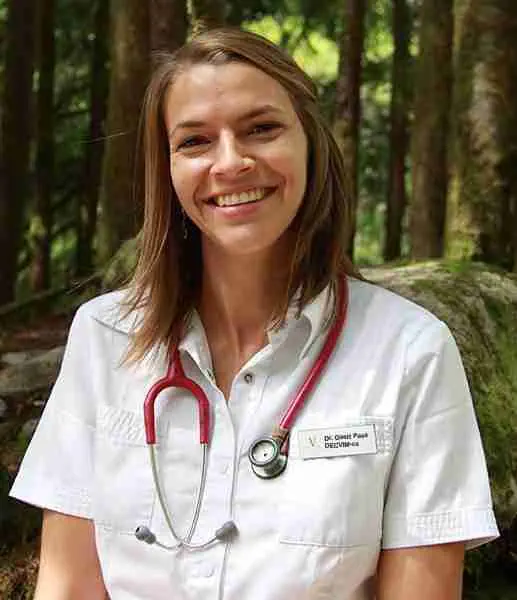
 Geert Paes, DVM, Dip ECVIM-ca
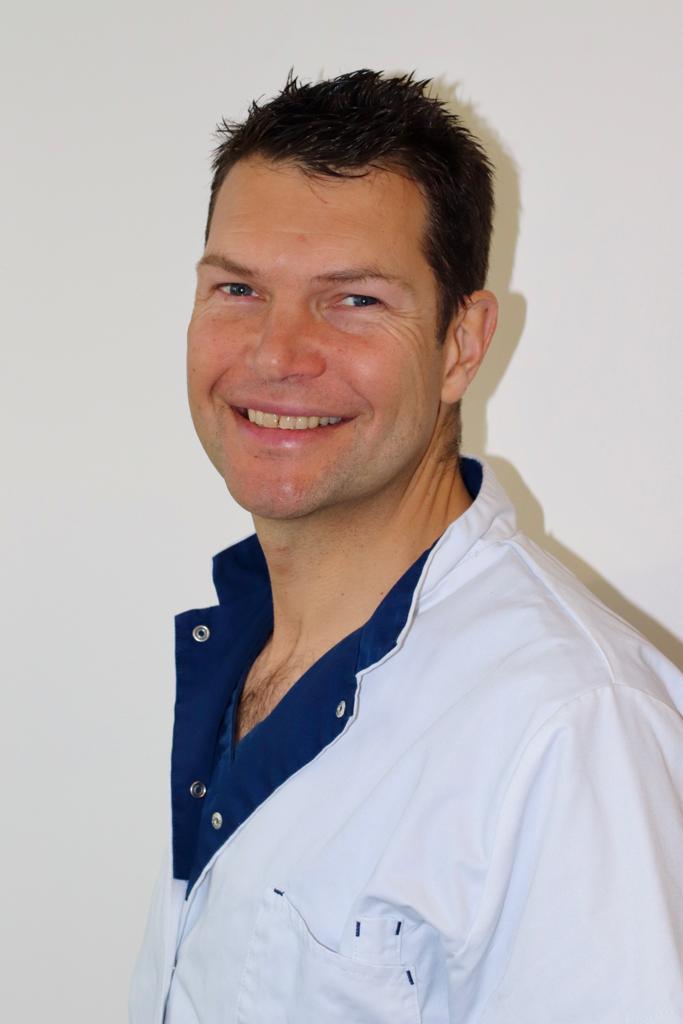 Joachim Proot, DVM, Dip ECVS
 Laura Udraite, Dip ECVD, Dip ACVD
 20 Lessons
 Topics
 Quiz
 Certificate
 Protocol

 Geert Paes, DVM, Dip ECVIM-ca
After graduating as a veterinarian in 2006 from the University of Ghent, Geert completed an internship and residency in small animal internal medicine. She remained at the university until 2012, after which she moved to Western Canada. There, she spent several years working in first-line practice, before transitioning back into emergency and referral medicine. This experience gave her a deep understanding of the realities of clinical practice and a strong appreciation for the challenges faced by general practitioners on a daily basis.
Geert has been a Diplomate of the European College of Veterinary Internal Medicine (ECVIM-CA) since 2017 and is (co-)author of several scientific publications. She has more than 15 years of experience in referral practice, including extensive experience in small animal internal medicine, emergency care, and teleconsulting.
However, what truly sets Geert apart is her passion for teaching. She is known for her ability to explain complex topics in a clear, accessible, and practical way, making internal medicine understandable for every veterinarian—regardless of their level of experience. Her teaching style is characterized by clear explanations, additional context, and a strong focus on clinical reasoning.
Having worked in first-line practice herself, Geert strongly believes that the “ideal scenario” is not always achievable. Her goal is not only to teach what the gold standard (Plan A) looks like, but also to equip veterinarians with the tools and confidence to make well-reasoned decisions when they need to rely on Plan B or Plan C.
Her courses are highly valued for their practical approach and direct applicability in daily practice, and her enthusiasm for internal medicine is contagious—she consistently succeeds in inspiring others to develop the same passion.
Driven by this vision, Geert founded OnlineVetTraining (OVT) in 2019, with the aim of providing accessible, high-quality, and clinically relevant education for veterinarians and veterinary professionals worldwide.
Joachim Proot, DVM, Dip ECVS Joachim Proot (ECVS diplomate) graduated as a veterinarian from the University of Ghent in 2001. After graduating, he did an internship in Canada and then worked in England for five years. After obtaining his Certificate in Small Animal Surgery; in 2006 he started working in a secondary care clinic in the United Kingdom and followed his ECVS specialization training there.
Joachim currently works as a soft tissue surgeon at Dierenziekenhuis Barendrecht (Netherlands) and also works as a passionate teacher for the Evidensia Academy (Netherlands). Joachim's interest lies in soft tissue surgery, but in his specialization trajectory he also gained extensive experience in orthopedics and neurosurgery.
Laura Udraite, Dip ECVD, Dip ACVD Laura Udraite Vovk graduated in Veterinary Medicine in 1999 from the Lithuanian University of Health Sciences. She worked for more than ten years in general practice, deepening her expertise and gaining valuable experience through observerships in referral clinics in Switzerland, Sweden, and Canada, as well as by attending numerous international congresses and continuing education events, mainly in the fields of endocrinology, dermatology, and reproductive medicine.
She founded and managed one of the largest private veterinary clinics in Vilnius, Lithuania, in which she remains a co-owner to this day.
In 2016, Laura began her specialist training in veterinary dermatology at Ludwig Maximilian University of Munich, under the supervision of her mentors Professor Dr. Ralf Müller and Dr. Sonya Bettenay. In 2020, she successfully passed the board examinations of both the European College of Veterinary Dermatology (ECVD) and the American College of Veterinary Dermatology (ACVD), becoming the first board-certified veterinary dermatologist in Lithuania.
Currently, Laura heads the Dermatology Department of the Teaching Hospital at Ludwig Maximilian University of Munich, works as a telemedicine consultant for private veterinary clinics, and serves as a guest lecturer at the Lithuanian University of Health Sciences. She is actively involved in the European College of Veterinary Dermatology, is a member of the ECVD Examination Committee, and mentors two ECVD/ACVD residents.
Laura is the author and co-author of numerous scientific publications in international peer-reviewed journals. She regularly lectures at national and international continuing education events and congresses in veterinary dermatology and gives presentations in Lithuanian, English, and German.
Laura Udraite Vovk schloss im Jahr 1999 ihr Studium der Veterinärmedizin an der Litauischen Universität der Gesundheitswissenschaften ab. Sie arbeitete über zehn Jahre in der Allgemeinpraxis, vertiefte ihr Fachwissen und sammelte wertvolle Erfahrung durch Hospitationen in Überweisungskliniken in der Schweiz, Schweden und Kanada sowie durch die Teilnahme an zahlreichen internationalen Kongressen und Fortbildungsveranstaltungen, vor allem in den Bereichen Endokrinologie, Dermatologie und Reproduktionsmedizin.
Sie gründete und leitete eine der größten privaten Tierkliniken in Vilnius, Litauen, an der sie bis heute als Mitinhaberin beteiligt ist.
Im Jahr 2016 begann Laura ihre Weiterbildung zur Fachtierärztin für Veterinärdermatologie an der Ludwig-Maximilians-Universität München unter der Anleitung ihrer Mentoren Professor Dr. Ralf Müller und Dr. Sonya Bettenay. Im Jahr 2020 bestand sie erfolgreich die Fachprüfungen des European College of Veterinary Dermatology (ECVD) sowie des American College of Veterinary Dermatology (ACVD) und wurde damit die erste board-zertifizierte Dermatologin in Litauen.
Derzeit leitet Laura die dermatologische Abteilung des Lehrkrankenhauses der Ludwig-Maximilians-Universität München, arbeitet als Telemedizin-Konsultantin für private Tierkliniken und ist als Gastdozentin an der Litauischen Universität der Gesundheitswissenschaften tätig. Sie engagiert sich aktiv im European College of Veterinary Dermatology, ist Mitglied der ECVD-Prüfungskommission und Mentorin von zwei ECVD/ACVD-Residenten.
Laura ist Autorin und Mitautorin zahlreicher wissenschaftlicher Publikationen in internationalen peer-reviewten Fachjournalen. Sie referiert regelmäßig auf nationalen und internationalen Fortbildungsveranstaltungen und Kongressen im Bereich der Veterinärdermatologie und hält Vorträge in litauischer, englischer und deutscher Sprache.