Do you feel your stress levels rise when an emergency patient arrives at the practice? Do you enjoy caring for critically ill patients in hospital, but want to feel more confident in your approach? Whether you are treating a puppy with parvovirus, a cat with urethral obstruction, or a dog with gastric dilatation-volvulus, emergency cases often require quick thinking, clear priorities, and confident decision-making. This training program is designed to help you develop exactly those skills.
Over the course of one year, you will be immersed in the fascinating world of emergency and critical care. The focus is on the situations you are most likely to encounter as a veterinarian in daily practice. Through clinical cases and evidence-based teaching, you will receive practical tools that you can immediately apply in your work.
By the end of this program, you will have built a strong foundation in the most common emergency situations, and you will feel more confident when faced with an unstable patient in your hospital ward.
The program consists of 10 modules, each focusing on a different area of emergency and critical care. It becomes available on 1 January 2027 and can be started at any time after that date. Once started, it runs over a period of one year. The entire program is fully online and self-paced. It includes minimum 50 hours of teaching material, including webinars, protocols, clinical cases, quizzes, and other learning resources.
This training program is designed for veterinarians who want to build or strengthen their knowledge of emergency and critical care in a structured and clinically relevant way.
The program covers the essential foundations of emergency medicine, making it suitable for recently graduated veterinarians or veterinarians in first-line practice who want to feel more confident when dealing with urgent or unstable patients. At the same time, it also explores specific emergency conditions in greater depth and provides a comprehensive update based on the latest literature.
This makes the program equally valuable for veterinarians who are already working in an emergency, hospitalisation, or referral setting and want to deepen their knowledge, refine their clinical reasoning, and make sure their approach is fully up to date.
Throughout the program, the focus remains practical and clinically relevant. You will not only learn what the ideal diagnostic and treatment plan looks like, but also how to make well-reasoned decisions when the ideal scenario is not possible.
The Emergency and Critical Care Training Program becomes available on 1 January 2027 and can be started at any time after that date. Once started, it runs over a period of one year and is fully online and self-paced, allowing you to work through the material according to your own schedule.
The program provides veterinarians with a strong all-round foundation in emergency and critical care, while also exploring specific conditions in greater depth. It combines different learning methods, including webinars, protocols, clinical cases, quizzes, and practical decision-making tools.
The program consists of 10 modules, each focusing on a specific area of emergency medicine. The modules open one by one in a predefined order, helping you progress through the program in a structured and logical way.
More than 10 lecturers contribute to this training program. Each of them brings their own clinical expertise, but they all share the same focus: explaining information in a clear, practical, and clinically applicable way, so that you can use what you learn directly in daily practice.
By the end of this training program, you will have developed a solid and practical understanding of the most common emergency and critical care situations in small animal practice.
You will learn how to approach unstable patients more systematically, how to prioritize diagnostics and treatment, and how to make confident clinical decisions under pressure.
The program is case-based, practical, and directly applicable to daily practice. You will receive protocols, clinical reasoning tools, quizzes, and supporting materials that help you translate theory into action.
The training program will be RACE-accredited for 50 continuing education credits.
Registrations are now open, and an early bird discount is available for early registrations:
7.5% discount for registrations before 30 September 2026
5% discount for registrations before 31 October 2026
The standard price for this training program is €1495.
The training program officially becomes available on 1 January 2027 and runs over a period of one year.
Participants who register before 1 January 2027 will gain access to the program on the official start date, after which they will have one year to complete the trajectory.
After 1 January 2027, it remains possible to enroll at any time. From that moment on, you can start immediately upon registration, and your one-year access period will begin from your personal start date.
For example:
If you register in September 2026, you will start on 1 January 2027 and have access until 1 January 2028.
If you register in February 2027, you can start immediately and will have access until February 2028.
Everyone feels the pressure when a patient arrives in respiratory distress or with suspected heart disease. These are exactly the cases where staying calm, thinking clearly, and working systematically makes all the difference.
The first part of this module focuses on acute dyspnoea. Through a practical webinar, you will learn how to approach dogs and cats with dyspnoea more confidently and systematically. This is complemented by a webinar on the interpretation of thoracic radiographs in dyspnoeic dogs and cats.
The second part of the module focuses on cardiology. We start with cardiovascular emergencies and discuss the most common acute presentations. How do you recognize that a dog or cat may have a cardiac problem? Which diagnostics are useful? And most importantly: which treatment is indicated?
Because cardiac patients can rarely be assessed properly without an ECG, two webinars will guide you through the basics of ECG interpretation and the most common ECG abnormalities in dogs and cats. The module concludes with a webinar on acute thromboembolism in cats.
The following topics are covered in this module:
Dogs and cats with anaemia are common patients in veterinary practice. Sometimes the underlying cause is immediately obvious; in other cases, it takes a more systematic work-up to identify the problem. When the anaemia is severe, or when the patient can no longer compensate for the drop in red blood cells, it becomes an emergency.
A solid understanding of the physiology and possible causes of anaemia is essential in order to act quickly and appropriately. In this module, we start with immune-mediated haemolytic anaemia and discuss the practical work-up of anaemic dogs and cats.
We then focus on thrombocytopenia and other coagulation disorders.
Clinical cases are used throughout the module, with a strong focus on clinically relevant and practical information that you can apply immediately in daily practice.
The following topics are covered in this module:
Vomiting, diarrhoea, abdominal pain… gastrointestinal emergencies are a frequent part of small animal practice. In this module, we focus on the cases where quick assessment and timely decision-making can make a real difference.
We start with acute pancreatitis in dogs, before moving on to the acute abdomen. This can be caused by a wide range of problems, including intestinal obstruction, gastrointestinal bleeding, gastric or splenic torsion, acute pancreatitis, and other serious conditions. Because these patients can deteriorate quickly, recognising the problem and starting appropriate treatment without delay is essential.
Abdominal radiographs are often an important part of the diagnostic work-up, so this module also includes a practical session on interpreting abdominal radiographs in dogs and cats with acute vomiting. You will then have the opportunity to apply what you have learned through several practice quizzes.
The module also covers specific gastrointestinal emergencies such as parvovirus and acute haemorrhagic gastroenteritis.
The following topics are covered in this module:
This module focuses on three essential aspects of emergency medicine: POCUS, trauma, and fluid therapy.
Point-of-care ultrasound can be an extremely valuable tool in emergency patients. You do not need to be an ultrasound expert to use POCUS in a clinically meaningful way. By learning where to place the probe and what to look for in each view, you can quickly gather useful information that helps you assess unstable patients more systematically.
The module also covers the acute management of trauma patients. Trauma cases often require quick decisions, clear priorities, and a structured approach. You will learn how to assess these patients, stabilise them, and decide which diagnostic and therapeutic steps are most important in the initial phase.
Finally, we take a closer look at fluid therapy. Many emergency patients will receive intravenous fluids, but choosing the right fluid plan requires more than simply placing an IV catheter and starting fluids. It requires an understanding of physiology, the different fluid types and their advantages and disadvantages, and, most importantly, a careful clinical assessment of the individual patient.
The following topics are covered in this module:
This module focuses on neurological and endocrine emergencies: patients that can be challenging, sometimes unstable, and often require a structured approach from the start.
We begin with common acute neurological presentations, including seizures and other neurological emergencies. You will learn how to assess these patients, recognise red flags, prioritise your diagnostic and treatment steps, and make practical decisions in the initial phase.
The second part of the module focuses on endocrine emergencies. We cover Addison’s disease, diabetic ketoacidosis, and hyperglycaemic hyperosmolar syndrome, with an emphasis on recognising these conditions, stabilising the patient, and making practical treatment decisions.
The following topics are covered in this module:
This module focuses on some of the most common urogenital emergencies in small animal practice.
We start with feline lower and upper urinary tract obstructions. In two practical webinars, you will learn more about urethral obstruction and ureteral obstruction in cats: how to recognise these patients, how to stabilise them, and how to decide on the most appropriate next steps.
The module also covers dystocia. What are the most common causes? When should you intervene? And how do you decide whether medical management is still appropriate or whether surgical intervention is needed?
Finally, we focus on acute kidney injury. What are the possible causes? How do you make the diagnosis? How do you assess the severity of the problem? And how do you treat and monitor dogs and cats with acute kidney injury in practice?
The following topics are covered in this module:
This module focuses on surgical emergencies: cases where a clear plan, timely intervention, and a structured approach can make a major difference.
We start with wound management. You will learn how to assess different types of wounds and decide whether primary closure is appropriate, or whether the wound first needs further cleaning, drainage, or delayed closure. We also discuss when to place a drain and how to choose the most suitable type.
Gastric dilatation-volvulus is another important surgical emergency. It is a condition that many veterinarians find stressful, but a structured approach makes it much more manageable. You will learn how to approach a patient with GDV from presentation to surgery, including initial stabilisation, key decision points, and practical surgical tips.
In the section on intestinal surgery, we review the basic principles and then build on them with practical tips and newer techniques that can help you manage more complex cases more confidently.
The module concludes with brachycephalic obstructive airway syndrome and how to approach these patients in practice.
The following topics are covered in this module:
Many emergency patients require close monitoring and intensive follow-up once they are admitted to the hospital. This module focuses on the practical aspects of caring for these patients and helps you recognize when a patient is deteriorating, stabilizing, or needs a change in treatment plan.
We start with important hospitalization procedures and the situations you are most likely to encounter in daily practice. The module also covers sepsis and shock. How do you recognize that a patient is septic or in shock? Which diagnostic steps are useful? How do you treat these patients, and how do you monitor their progress in a practical and clinically meaningful way?
Blood transfusions are also covered in this module. Which blood products are available? Which product is recommended for which indication? What should you monitor during and after a transfusion, and how should you respond if complications occur?
The following topics are covered in this module:
Anaesthesia in emergency patients can be challenging, especially when the patient is unstable, painful, hypovolaemic, septic, or otherwise critically ill. This module focuses on how to make anaesthesia safer and more predictable in urgent and high-risk situations.
The focus is on anaesthesia in emergency cases such as gastric dilatation-volvulus, bleeding splenic masses, caesarean sections, and other unstable patients. You will learn which drugs are safest to use, when dose reductions may be needed, what to consider when anaesthetising a pregnant bitch, and how to anticipate and prevent common complications.
The module also covers CPR, with a review of the latest RECOVER guidelines, so that your approach to cardiopulmonary resuscitation is fully up to date.
Finally, we focus on acute pain management. You will learn how to recognise and treat pain in emergency patients and how to build a rational analgesic plan that can be adapted to the individual patient and clinical situation.
The following topics are covered in this module:
We conclude the program with a short module on ophthalmological emergencies.
This 1.5-hour webinar focuses on the eye emergencies you are most likely to encounter in first-line practice. You will learn how to recognize urgent ophthalmic problems, what you can do yourself, and when referral is recommended.
The webinar provides a practical overview of the key questions to ask during telephone triage, the essential steps in your clinical assessment, and the treatments that are (and are not) appropriate in emergency situations.
Even without advanced equipment, the right knowledge and a structured approach can make a major difference to the patient’s prognosis.
The following topic is covered in this module:
Deborah is a Diplomate of the European College of Veterinary Surgeons (ECVS) with a clinical focus on small animal surgery and surgical oncology. She studied veterinary medicine at the University of Bern, where she obtained her Master of Veterinary Medicine and completed her doctoral degree (Dr. med. vet.) in 2015.
After a rotating internship at the Small Animal Clinic of the University of Bern, Deborah gained further experience in private practice before returning to the university to complete an ECVS residency in small animal surgery. As part of her specialist training, she undertook an externship and later a fellowship in surgical oncology at the University of Florida, where she received ACVS fellowship training in surgical oncology.
Since September 2020, Deborah has been working as a senior surgeon in the Small Animal Surgery Department of the Small Animal Clinic at the University of Bern. Her work combines advanced clinical surgery with teaching and the supervision of interns and residents, with a particular interest in oncologic surgery.
Deborah ist Diplomate des European College of Veterinary Surgeons (ECVS) und spezialisiert auf die Chirurgie bei Kleintieren mit besonderem Schwerpunkt auf der chirurgischen Onkologie. Sie studierte Tiermedizin an der Universität Bern, wo sie den Masterabschluss erlangte und 2015 ihre Promotion (Dr. med. vet.) abschloss.
Nach einem rotierenden Internship an der Kleintierklinik der Universität Bern sammelte Deborah weitere klinische Erfahrung in der Privatpraxis, bevor sie an die Universität zurückkehrte, um eine Residency des European College of Veterinary Surgery (ECVS) in der Kleintierchirurgie zu absolvieren. Im Rahmen dieser Weiterbildung absolvierte sie sowohl ein Externship als auch ein Fellowship in chirurgischer Onkologie an der University of Florida und erhielt dort eine ACVS Fellowship-Ausbildung in Surgical Oncology.
Seit September 2020 ist Deborah als Oberärztin in der Abteilung für Kleintierchirurgie der Kleintierklinik der Universität Bern tätig. Ihre Arbeit umfasst die spezialisierte chirurgische Versorgung von Patienten sowie Lehr- und Betreuungstätigkeiten, mit einem besonderen Interesse an der chirurgischen Onkologie.


Emmelie Stock graduated as a veterinarian in 2012 from the Faculty of Veterinary Medicine at Ghent University. She subsequently completed an internship and residency in diagnostic imaging. During her residency, she successfully completed a PhD research project entitled: “The evaluation of kidney function in cats using non-invasive functional imaging.”
In 2019, she obtained the title of Diplomate of the European College of Veterinary Diagnostic Imaging (ECVDI). Afterwards, she worked for several years as Head of the Diagnostic Imaging Department at the Faculty of Veterinary Medicine of Ghent University.
Currently, Emmelie works for Evidensia Belgium and France. She is active at Anima+ in De Pinte and Oncovet in Villeneuve-d’Ascq, and is also affiliated with VetCT for teleradiology services.
Dr. Meyer graduated from the University of Bern, Switzerland in 2010. After completing a doctorate thesis at the Institute of Genetics at the same university, she went on to work in a small animal clinic for 2 years, followed by an internship in Small Animal Internal Medicine at the University of Zurich. After several years working in general practice and emergency medicine in Switzerland and the UK, she pursued residency training in emergency and critical care at the University of Bern and Washington State University. Dr. Meyer became a diplomate in Small Animal Emergency and Critical Care in 2022 and joined the University of Zurich as a senior lecturer the same year.
Franzi has a genuine passion for teaching and takes great joy in guiding residents through the challenges of emergency and critical care. She creates a relaxed and supportive atmosphere where no question is too small and encourages learners to speak up and think critically. Her approachable manner makes her a mentor who is always happy to explain complex concepts in a clear, straightforward way. Whether in the lecture hall or the clinic, Franzi’s enthusiasm for education shines through, inspiring the next generation of critical care specialists.
Dr. Meyer schloss ihr Studium der Tiermedizin 2010 an der Universität Bern (Schweiz) ab. Nach dem Abschluss ihrer Doktorarbeit am Institut für Genetik derselben Universität arbeitete sie zwei Jahre in einer Kleintierklinik, gefolgt von einem Internship in der Kleintier-Inneren Medizin an der Universität Zürich. Nach mehreren Jahren Tätigkeit in der Allgemeinpraxis und in der Notfallmedizin in der Schweiz und im Vereinigten Königreich absolvierte sie eine Residency in Notfall- und Intensivmedizin an der Universität Bern sowie an der Washington State University. Im Jahr 2022 erlangte Dr. Meyer den Titel Diplomate in Small Animal Emergency and Critical Care und trat im selben Jahr eine Stelle als Senior Lecturer an der Universität Zürich an.
Franzi hat eine große Freude am Unterrichten und begleitet Resident:innen gerne durch die Herausforderungen der Notfall- und Intensivmedizin. Sie schafft eine offene und unterstützende Lernatmosphäre, in der jede Frage willkommen ist, und ermutigt dazu, aktiv mitzudenken und kritisch zu hinterfragen. Durch ihre zugängliche Art gelingt es ihr, auch komplexe Inhalte klar und verständlich zu vermitteln. Sowohl im Hörsaal als auch in der Klinik ist ihr Engagement für die Ausbildung deutlich spürbar und motiviert angehende Spezialist:innen in der Intensivmedizin.
After graduating as a veterinarian in 2006 from the University of Ghent, Geert completed an internship and residency in small animal internal medicine. She remained at the university until 2012, after which she moved to Western Canada. There, she spent several years working in first-line practice, before transitioning back into emergency and referral medicine. This experience gave her a deep understanding of the realities of clinical practice and a strong appreciation for the challenges faced by general practitioners on a daily basis.
Geert has been a Diplomate of the European College of Veterinary Internal Medicine (ECVIM-CA) since 2017 and is (co-)author of several scientific publications. She has more than 15 years of experience in referral practice, including extensive experience in small animal internal medicine, emergency care, and teleconsulting.
However, what truly sets Geert apart is her passion for teaching. She is known for her ability to explain complex topics in a clear, accessible, and practical way, making internal medicine understandable for every veterinarian—regardless of their level of experience. Her teaching style is characterized by clear explanations, additional context, and a strong focus on clinical reasoning.
Having worked in first-line practice herself, Geert strongly believes that the “ideal scenario” is not always achievable. Her goal is not only to teach what the gold standard (Plan A) looks like, but also to equip veterinarians with the tools and confidence to make well-reasoned decisions when they need to rely on Plan B or Plan C.
Her courses are highly valued for their practical approach and direct applicability in daily practice, and her enthusiasm for internal medicine is contagious—she consistently succeeds in inspiring others to develop the same passion.
Driven by this vision, Geert founded OnlineVetTraining (OVT) in 2019, with the aim of providing accessible, high-quality, and clinically relevant education for veterinarians and veterinary professionals worldwide.

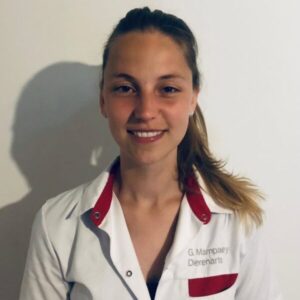
Gitte Mampaey graduated as a veterinarian from Ghent University in 2018, after which she completed a one-year rotating internship in small animal medicine. In 2020, she began her residency training in veterinary cardiology at Ghent University. In 2022, she obtained her ESAVS Certificate in Cardiology (Cert. SAVP Cardiology). In March 2024, she became an EBVS® European Specialist in Veterinary Cardiology (Dip. ECVIM-CA Cardiology). In May 2024, Gitte also completed an additional two-year training program at the Catholic University of Leuven, where she further specialized in human congenital heart diseases and cardiac surgery to better support her patients.
Gitte works at the clinic, where she is responsible for daily consultations and the supervision of students and junior colleagues. She has a particular interest in emergency and critical cardiology patients, as well as congenital heart diseases and interventional cardiology. She therefore prefers to spend much of her time in the operating room, where she performs catheter-based interventions.
In addition to her clinical work, Gitte is passionate about research. She is an author and co-author of scientific publications in journals including the Journal of Veterinary Cardiology, Veterinary Sciences, and the Vlaams Diergeneeskundig Tijdschrift. In the future, she hopes to further pursue research with the goal of obtaining a PhD in cardiology.
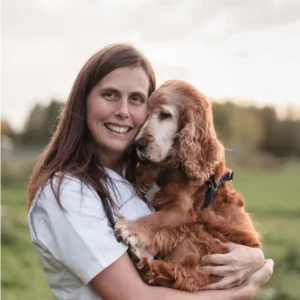
In her free time, Gitte enjoys walking in nature with her dog, Zina. During the summer holidays, she can often be found underwater as a recreational scuba diver.
Ine Cornelis graduated as a veterinarian in 2008 from the Faculty of Veterinary Medicine (University of Ghent). She then followed a one-year rotating internship at the Department of Small Animals (Faculty of Veterinary Medicine) in Merelbeke.
In October 2009, Ine started her residency in neurology, which she successfully completed in 2014 with her European specialist diploma (Diplomate of the European College of Veterinary Neurology). At the same time, she also started a doctoral research on the diagnosis, treatment and prognosis of meningoencephalomyelitis of unknown origin in dogs.
From November 2014 to November 2015, she worked as a Staff Clinician in Neurology and Neurosurgery at the Royal Veterinary College in London.
After returning to the Faculty of Veterinary Medicine (Ghent University) at the end of 2015, Ine continued working on her PhD, which she successfully defended in April 2017. Since then, Ine has been working as a neurology specialist at the Small Animal Clinic (Faculty of Veterinary Medicine, Ghent University).
Joachim Proot (ECVS diplomate) graduated as a veterinarian from the University of Ghent in 2001. After graduating, he did an internship in Canada and then worked in England for five years. After obtaining his Certificate in Small Animal Surgery; in 2006 he started working in a secondary care clinic in the United Kingdom and followed his ECVS specialization training there.
Joachim currently works as a soft tissue surgeon at Dierenziekenhuis Barendrecht (Netherlands) and also works as a passionate teacher for the Evidensia Academy (Netherlands). Joachim's interest lies in soft tissue surgery, but in his specialization trajectory he also gained extensive experience in orthopedics and neurosurgery.
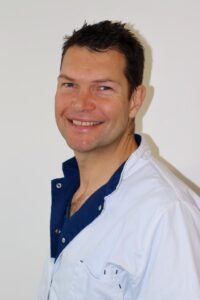
Nicole Willems is a European specialist in small animal surgery and orthopaedics. She graduated from Utrecht University in 2007 and worked as a primary care veterinarian in several veterinary practices. In 2010, she completed an internship at the Faculty of Veterinary Medicine in Utrecht.
She subsequently pursued a PhD at Utrecht University, focusing on the development of regenerative strategies for humans and animals with intervertebral disc degeneration, and successfully defended her thesis in 2016.
From 2015 onwards, she combined her PhD research with a position as a veterinarian at the Faculty of Veterinary Medicine in Utrecht. She then started her specialist training in surgery at the same institution and, after passing her exams in 2023, was admitted as a Diplomate of the European College of Veterinary Surgeons.
Nicole is a passionate surgeon who is committed to staying up to date with the latest developments in her field and enjoys sharing this knowledge with colleagues.

He graduated in veterinary medicine in 2019 from the Free University of Berlin. From 2019 to 2020, he worked as a clinical assistant in the Emergency and Critical Care Department of the Small Animal Clinic at the Zurich Animal Hospital. He then continued as a clinical assistant in the Ophthalmology Department from 2020 to 2021.
In 2022, he began a three-year residency program in veterinary ophthalmology at the Ophthalmology Department of the Zurich Animal Hospital, which he successfully completed in October 2024. In parallel, he completed his doctoral thesis in 2025, focusing on interobserver agreement in canine gonioscopy using the classification scheme of the European College of Veterinary Ophthalmologists for hereditary eye diseases.
In 2024, he attended the Basic Science Course in Veterinary Ophthalmology at the University of California, Davis (USA). As of April 2025, he joined the Veterinary Eye Center (TAZ) in Oberentfelden. In May 2025, he successfully passed the specialist examination and became a Diplomate of the European College of Veterinary Ophthalmologists (ECVO) in Edinburgh (UK).
Er schloss 2019 sein Studium der Veterinärmedizin an der Freien Universität Berlin ab. Von 2019 bis 2020 arbeitete er als Assistenztierarzt in der Abteilung für Notfall- und Intensivmedizin an der Kleintierklinik des Tierspitals Zürich. Anschließend war er von 2020 bis 2021 als Assistenztierarzt in der Augenabteilung desselben Hauses tätig.
Ab 2022 absolvierte er ein dreijähriges Residencyprogramm in Veterinärophthalmologie an der Augenabteilung des Tierspitals Zürich, das er im Oktober 2024 erfolgreich abschloss. Parallel dazu verfasste er seine Doktorarbeit, die er 2025 abschloss. Inhaltlich befasste sich die Dissertation mit der Untersucherübereinstimmung bei der Gonioskopie von Hunden anhand des Klassifizierungsschemas des European College of Veterinary Ophthalmologists für erbliche Augenerkrankungen.
Im Jahr 2024 nahm er am Basic Science Course in Veterinary Ophthalmology an der University of California, Davis (USA), teil. Ab April 2025 verstärkt er das Tierärztliche Augenzentrum (TAZ) in Oberentfelden. Im Mai 2025 bestand er erfolgreich die Fachprüfung und wurde Diplomate des European College of Veterinary Ophthalmologists (ECVO) in Edinburgh (UK).
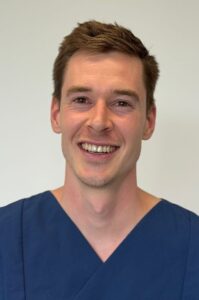
Pascale obtained the degree of Veterinarian at Ghent University in 2006. Immediately afterwards, she followed a rotating internship in small animal medicine at the Department of Medicine and Clinical Biology of Small Animals. Fascinated by the possibilities that scientific research can offer for the clinic, she started a doctoral study in Internal Medicine on kidney function in dogs with Cushing's syndrome. Gradually, her interest shifted from Internal Medicine to Cardiology and after completing her PhD in 2011, she started a residency at the European College of Veterinary Internal Medicine (ECVIM), subspecializing in Cardiology. During this training, she worked for 1 year in Internal Medicine, at the University of Ghent and 2.5 years in Cardiology at the Universities of Munich, Germany and Zurich, Switzerland. In 2015, she obtained the Diploma of European Specialist in Cardiology (DipECVIM-ca Cardiology). Since October 2016, she has been working as head of the Cardiology Department of the Department of Small Animals at the University of Ghent (Belgium). In October 2017, she was appointed Professor of Cardiology and, together with her enthusiastic team, she is responsible for education, consultations and scientific research in small animal cardiology at the University of Ghent (Belgium).
Pascale erlangte 2006 den Abschluss als Tierärztin an der Universität Gent. Unmittelbar danach absolvierte sie ein rotierendes Internship in der Kleintiermedizin am Fachbereich für Innere Medizin und Klinische Biologie der Kleintiere. Fasziniert von den Möglichkeiten, die wissenschaftliche Forschung für die klinische Praxis bietet, begann sie eine Doktorarbeit in der Inneren Medizin zum Thema Nierenfunktion bei Hunden mit Cushing-Syndrom. Im Laufe der Zeit verlagerte sich ihr Interesse von der Inneren Medizin zur Kardiologie, und nach Abschluss ihrer Promotion im Jahr 2011 begann sie eine Residency am European College of Veterinary Internal Medicine (ECVIM) mit Schwerpunkt Kardiologie.
Im Rahmen dieser Weiterbildung arbeitete sie ein Jahr in der Inneren Medizin an der Universität Gent sowie zweieinhalb Jahre in der Kardiologie an den Universitäten München (Deutschland) und Zürich (Schweiz). Im Jahr 2015 erlangte sie den Titel einer Europäischen Spezialistin für Kardiologie (DipECVIM-ca Kardiologie). Seit Oktober 2016 ist sie Leiterin der Kardiologieabteilung der Abteilung für Kleintiere an der Universität Gent (Belgien). Im Oktober 2017 wurde sie zur Professorin für Kardiologie ernannt und ist gemeinsam mit ihrem engagierten Team für Lehre, Konsultationen und wissenschaftliche Forschung im Bereich der Kleintierkardiologie an der Universität Gent verantwortlich.
Sanne graduated as a veterinarian in 2008 from the Faculty of Veterinary Medicine (University of Ghent). She then completed a rotating internship at the Department of Small Animals in Merelbeke.
After working as an anesthesia intern in France for a year, she returned to Ghent and started her specialization training in anesthesia, which she successfully completed in 2014 with her European specialist diploma (Diplomate of the European College of Veterinary Anaesthesia and Analgesia).
In 2015, she moved to the United Kingdom, where she became a Recognized Specialist in Veterinary Anaesthesia in RCVS. She has been working at Pride Veterinary Referrals as an anesthetist since 2016. She is also responsible for the pain clinic there. Sanne is particularly interested in the induction and monitoring of anesthesia, the recognition of pain in animals and the treatment of chronic pain.
Urszula Bartoszuk graduated from Warsaw University of Life Sciences in Poland where a few years later obtained as well her PhD degree.
Dr. Urszula Bartoszuk performed her Residency Programme at the University of Zurich in Switzerland. After completion of the residency program in 2017, she took up the role of senior medical assistant in small animal cardiology at the University of Zurich.
From 2019 until 2021, Dr. Urszula Bartoszuk was senior lecturer in the Department of Small Animals Cardiology at the Small Animals Teaching Hospital, University of Liverpool, UK. Thereafter she moved to Hong Kong, where she is working until now in a multidisciplinary referral hospital leading a cardiology department.

Yi completed her veterinary studies and internship in 2013 at the University of Ghent and obtained her specialization in Internal Medicine in 2019 at the University of Giessen (Germany). She subsequently worked as a clinical supervisor in the Department of Internal Medicine at the University of Giessen.
Yi has built an extensive academic career across several renowned university hospitals, including Ghent, Utrecht, and Bern, where she worked as a specialist in Internal Medicine. In 2022, she expanded her clinical experience by working for a year at one of the largest private referral clinics in Hong Kong, gaining valuable insight into veterinary practice outside the academic setting.
Since 2023, Yi has been working internationally as an online consultant for primary care veterinarians, supporting them with challenging internal medicine cases, while also contributing as a lecturer in various educational programs. She remains clinically active through locum work in practices around the world and is involved in volunteer work at local animal shelters.
Yi is deeply passionate about teaching. She is often described as a “walking encyclopedia,” with an exceptional depth and breadth of knowledge. What truly sets her apart, however, is her ability to translate this knowledge into clear, structured, and understandable explanations, making even complex internal medicine topics accessible for veterinarians at all levels.
Her goal is to provide veterinarians with the tools, knowledge, and confidence to independently approach and solve internal medicine cases in daily practice. Thanks to her experience in multiple university hospitals and private clinics across different countries, Yi has developed a strong awareness of how case presentation, disease prevalence, and availability of diagnostics and treatments can vary depending on the setting. This allows her to bring a highly practical, flexible, and globally relevant perspective to her teaching.
Exploring new environments, learning from international experts, and experiencing different cultures have always been central to her personal and professional growth. She continues this journey together with her partner, their cat Nidalee, and their adventurous dog Harper.
Yi schloss 2013 ihr Studium der Tiermedizin sowie ihr Internship an der Universität Gent ab und erlangte 2019 ihre Spezialisierung in der Inneren Medizin in Gießen (Deutschland). Anschließend arbeitete sie als klinische Supervisorin in der Abteilung für Innere Medizin an der Universität Gießen.
Yi baute eine umfangreiche akademische Laufbahn an verschiedenen Universitätskliniken auf. Sie hatte die Möglichkeit, mit renommierten Professorinnen und Professoren ihres Fachgebiets an den Universitäten Gent, Utrecht und Bern zusammenzuarbeiten, jeweils in der Funktion als Spezialistin für Innere Medizin. Im Jahr 2022 arbeitete sie ein Jahr lang in der größten privaten Tierklinik in Hongkong, wo sie wertvolle Einblicke in die Arbeit außerhalb des universitären Umfelds gewann.
Das Erkunden neuer Umgebungen, das Lernen von und Arbeiten mit unterschiedlichen Expertinnen und Experten sowie das Erleben neuer Kulturen waren stets zentrale Elemente ihrer persönlichen Entwicklung. Aus diesem Grund entschied sie sich, gemeinsam mit ihrem Partner, ihrer Katze Nidalee und ihrem abenteuerlustigen Hund Harper die Welt Schritt für Schritt, Land für Land, zu bereisen. Seit 2023 arbeitet Yi online als Beraterin für Erstlinien-Tierärztinnen und -Tierärzte bei komplexen Fällen sowie als Referentin für verschiedene Fortbildungen in ihrem Fachgebiet. Zudem bleibt sie durch Vertretungstätigkeiten in Tierkliniken weltweit praktisch tätig und ergänzt dies durch ehrenamtliche Arbeit in lokalen Tierschutzorganisationen.

I really like that the course is divided into short videos. It makes it much easier to fit the training into a busy day, because you can watch two or three short videos in between other things, instead of having to sit down for a full one-hour webinar.
Most of the explanations are compact, clear, and very practice-oriented. As a first-line practitioner, I really appreciate that the content is directly relevant and useful for the cases we see in daily practice.
Linda
Th emergency and critical care training program is very practical and clinically relevant. I especially appreciate that so much of the information can be applied directly in daily practice. The explanations are clear and concrete, and include useful details such as treatment options, dosages, and practical tips that you can actually use with your patients. It is not just theoretical knowledge, but information that helps you make better decisions in the clinic.
Ann
I found the topics incredibly useful. They come up so often in daily practice. I used to feel really stressed when seeing dogs or cats with respiratory distress, or when dealing with patients with stridor, because I wasn’t always sure what to do first. This course gave me very clear and practical starting points.
I especially love the protocols. They are exactly the kind of tools I want to have available in the clinic, so I can quickly refer back to them when needed.
Isaline
I really enjoyed this continuing education program and would definitely recommend it to colleagues. The webinars are interesting, practical, and given by different speakers, which keeps the content varied and engaging. I especially appreciated how clearly everything is explained and how many different topics are covered. Overall, a very enjoyable and useful way to keep learning.
Vera
I almost wish there were more hours in the day, just so I could take the time to enjoy all the OVT courses properly. The lessons are always clear, focused, and practical, without unnecessary details. I also really appreciate the handouts: they are well structured, easy to use, and perfect to come back to afterwards whenever I want to refresh something.
Heleen
My self-confidence as a veterinarian has grown enormously since this course. It contains a lot of practical material, which I have already frequently applied in practice.
Alex
I am super happy with OVT!!!!
I’ve now started a specialist veterinarian training, and I have to admit I still regularly go back to the OVT presentations. They remain such a clear and practical reference, even at this stage of my training ;-).
Shana
I really enjoyed following the OVT training program this past year. The modules were clear, practical, and covered so many useful topics. I liked that I could go through the lessons at home in small, manageable moments, which made it easy to keep learning alongside work. It was a very enjoyable and motivating way to refresh my knowledge.
Laura
Everything is explained so clearly and calmly. I especially like the webinars and the accompanying handouts, because they make it much easier to go through the material and come back to it whenever needed. I’m so happy with the OVT training programs that I’m now already completing my third trajectory ;-).
Olivia
A very valuable and high‑quality training program with great support and guidance throughout.
Just make sure you set aside enough study time!
Leen
Because the material is divided into small pieces, it’s really easy to fit it into my day. At home I can watch part of a webinar, on the train I might read through a handout, and between two patients in the clinic I can quickly review a practical case. Super convenient!
Charlotte Tournicourt
I’m really excited about my training program with OVT so far.
All the topics are super interesting and I’ve already learned a lot.
The mix of online lessons, quizzes, and protocols keeps things varied and helps me stay focused.
The biggest advantage for me is actually during my on-call shifts. I don’t live near the clinic, so I often
have to drive back and forth and wait for clients to arrive. Now I usually just stay at the clinic and work
through some OVT material. If people arrive a bit later, it doesn’t bother me at all as I’m happily watching
lessons and using my time productively ;-).
I’m already looking forward to the next topics!
Anaïs De Brouwer
I’d really like to thank OVT for the very practical and interesting webinars, podcasts, and protocols!
As an equine vet, OVT has helped me tremendously to deepen my knowledge in small animal medicine.
Honestly, there hasn’t been a week where I didn’t log in to OVT… I wouldn’t want to work without it anymore ;).
Shana Van Wassenhove
Join now and take the next step towards confident clinical decision-making.