
Do you enjoy tackling complex cases and getting to the bottom of what’s really going on? Do you thrive on patients where the diagnosis isn’t immediately obvious and clinical reasoning truly matters? And are you particularly interested in respiratory disease, infectious conditions, immune-mediated disorders, or critically ill patients?
If so, you’re not alone. These types of cases are an essential part of both first-line and referral practice, and often require a structured and confident approach. This training program is specifically designed for veterinarians who want to feel well-equipped when managing more complex internal medicine cases, and who are looking to further develop their clinical reasoning and decision-making skills.
Over the course of one year, you will be immersed in key areas of internal medicine that are highly relevant in daily practice. Through clinically relevant scenarios and grounded in the latest literature, this program provides practical tools to help you approach cases in a structured and confident way, even when they become challenging or acute.
Within this training program, the following core areas of internal medicine are covered: respiratory medicine, infectious diseases, immune-mediated disorders and bone marrow disease, hepatology and pancreatic disease, and emergency and critical care.
This program is fully self-paced and entirely online, allowing you to complete it at your own pace and according to your own schedule. Despite this independent format, the learning experience is designed to feel highly engaging and interactive. Short, focused video lectures are alternated with a variety of learning materials, including protocols, step-by-step plans, recommended reading, and self-assessment quizzes.
The program consists of 6 modules and includes at least 50 hours of educational content, primarily delivered through online webinars. The modules are released sequentially, and you will have two months to complete each module before progressing to the next. Each module features clinical cases that you will work through independently, followed by in-depth video discussions highlighting the clinical reasoning and key take-home messages. This case-based approach ensures that the content remains practical, relevant, and directly applicable to your daily work.
Please note that the 50 hours refers to the webinar content alone. To complete the full program, including learning materials, clinical cases, and quizzes, you should expect to spend approximately 10–12 hours per module, ensuring a thorough and comprehensive learning experience.
For veterinarians with a particular interest in other areas of internal medicine, we also offer a complementary program: Internal Medicine I, focusing on endocrinology, gastroenterology, uro-nephrology, hematology and cytology, and hepatology/pancreatic disease. Both programs cover entirely different topics and can be followed independently or alongside each other. Participants who enroll in both programs receive a 10% discount on each trajectory.
This training program is designed for veterinarians working in first-line practice or in a hospital setting who regularly encounter internal medicine cases and want to approach them with greater confidence and structure. It is ideal for those who enjoy clinical reasoning, especially in cases where the diagnosis is not immediately clear and a systematic approach is essential.
Whether you are early in your career or already experienced but looking to strengthen your foundation, this trajectory will support you in building a solid, practical understanding of internal medicine. Core principles are thoroughly covered, while at the same time the program is continuously aligned with the latest literature and current insights. This makes it equally valuable for veterinarians who already have a good foundation but want to ensure they are fully up to date with the most recent developments in the field.
This one-year training program offers a comprehensive and structured approach to small animal internal medicine, focused on the types of cases you encounter in daily practice. Within this program, the following core areas of internal medicine are covered: respiratory medicine, infectious diseases, immune-mediated disorders and bone marrow disease, hepatology and pancreatic disease, and emergency and critical care.
The program is fully self-paced and entirely online, allowing you to learn at your own pace and according to your own schedule. Despite the online format, the course is specifically designed to feel highly engaging and interactive, through a continuous alternation of different learning methods.
You will learn through a combination of:
The training program consists of 6 modules and includes at least 50 hours of educational content. Modules are released sequentially, and you will have two months to complete each module, allowing ample time to integrate the material into your daily practice.
Please note that the 50 hours refers to the webinar content alone. To complete the full program, including learning materials, clinical cases, and quizzes, you should expect to spend approximately 10–12 hours per module, ensuring a thorough and comprehensive learning experience.
This training program is designed to give you more than just knowledge. It aims to build a solid foundation in internal medicine and the confidence to apply it in your daily clinical work. By combining theory with case-based learning, you will develop a structured approach to even the most complex cases, allowing you to make well-reasoned decisions with greater certainty.
Beyond the clinical benefits, the program is also accredited by RACE for 55 continuing education credits, ensuring that your learning is formally recognized.
However, the most valuable outcome of this training program is the confidence and clarity you will gain when approaching internal medicine cases. You will finish the program feeling better equipped, more structured in your thinking, and more confident in your clinical decision-making.
Registrations are now open, and an early bird discount is available for early registrations:
The training program officially starts on November 15 and runs over a period of one year.
Participants who register before November 15 will gain access to the program on the official start date (November 15), after which they will have one year to complete the program.
After November 15, it remains possible to enroll at any time. From that moment on, you can start immediately upon registration, and your one-year access period will begin from your personal start date.
For example:
Respiratory diseases in dogs and cats are a common cause of coughing, dyspnea, and reduced exercise tolerance. Given the wide range of possible underlying causes, this topic is divided into two modules. In this first part, we focus on disorders of the trachea and lower airways, including the pleural space.
We cover both the most common and less frequently encountered conditions affecting this part of the respiratory system, with a strong focus on recognition, differential diagnosis, diagnostic approach, and treatment.
The following conditions are discussed in this module:
In addition to the theoretical content, you will be provided with practical tools such as diagnostic decision trees, treatment protocols, and clinical cases. Through real-life examples, you will learn how to build appropriate differential diagnoses, select the most relevant diagnostic tests in a logical sequence, and develop evidence-based treatment plans.
Diseases of the nose and upper respiratory tract in dogs and cats can present with a wide range of clinical signs, including sneezing, nasal discharge, stertor, stridor, or respiratory distress. The list of differential diagnoses is often extensive, making a systematic approach essential to reach an accurate diagnosis and implement targeted treatment.
In this second respiratory module, we focus on disorders of the nasal cavity, nasopharynx, and larynx. Both common and less frequently encountered conditions are discussed, with emphasis on diagnostic approach, treatment options, and prognosis.
The following conditions are covered in this module:
Throughout the module, the focus is on translating theory into practice, enabling you to make well-reasoned diagnostic decisions and develop targeted treatment plans for patients with upper respiratory tract disease.
Acute patients require rapid, well-informed decision-making. In this module, the focus is on initial stabilization, diagnostic approach, and early treatment of emergency cases. Theory is combined with practical application, allowing you to directly translate the acquired knowledge into clinical practice.
The following topics are covered:
Special attention is given to recognizing life-threatening conditions, setting the right priorities, and selecting the most appropriate diagnostic and therapeutic steps.
The module consists of a combination of on-demand webinars, practical learning materials, and clinical cases. Through these, you will develop a structured approach to emergency patients and strengthen your clinical decision-making skills.
At the end of this module, you will be better equipped to rapidly recognize emergencies, stabilize patients effectively, initiate appropriate treatment, and select targeted diagnostic tests.
Infectious diseases in dogs and cats often present a diagnostic challenge. They frequently manifest with non-specific clinical signs such as fever, weight loss, lethargy, or lymphadenopathy, requiring a structured and systematic approach to reach an accurate diagnosis. In addition, some infections do not always result in overt disease and animals may act as subclinical carriers, with clinical signs only developing under certain conditions.
In this module, we take an in-depth look at several important infectious diseases encountered in both first-line and referral practice.
For feline patients, the following infections are covered:
We also explore a range of vector-borne diseases, including:
For each condition, we discuss pathogenesis, transmission, clinical presentation, diagnostic options, treatment strategies, and prognosis. In addition, special attention is given to the zoonotic potential of certain infections and the implications for public health, including preventive measures and the veterinarian’s role within the One Health framework.
The module combines theoretical knowledge, practical step-by-step approaches, and clinical cases, ensuring that you not only understand the biology of these pathogens but also know how to approach these cases in a structured and practical way in daily practice.
In the Internal Medicine I program, dedicated modules are focused on gastroenterology and on hepatology and pancreatic disease. However, it is not possible to cover all relevant conditions within these areas in full detail within a limited timeframe.
For this reason, the Internal Medicine II program includes an additional module dedicated to important conditions that were not covered or only briefly addressed previously, but which are commonly encountered in clinical practice and require a structured approach.
In this advanced module, we focus on:
The module consists of a combination of on-demand webinars, clinical case discussions, and practical learning materials, allowing you to explore these topics in depth. Through clinical examples, you will gain a clear understanding of the pathophysiology, diagnostic approach, and treatment strategies, enabling you to confidently apply this knowledge in practice.
In this module, we focus on several of the most common and clinically relevant disorders of the immune system and bone marrow in dogs and cats. We cover immune-mediated thrombocytopenia (IMTP), immune-mediated hemolytic anemia (IMHA), and immune-mediated polyarthritis (IMPA), with attention to pathogenesis, clinical presentation, diagnostic approach, and treatment.
In addition, we provide a comprehensive overview of the different immunosuppressive therapies, including their mechanisms of action, indications, potential side effects, and monitoring strategies.
The module also explores pancytopenia and its potential causes, such as myelodysplastic syndrome and other important bone marrow disorders. As part of this, bone marrow aspiration is discussed in detail—when to consider it, available techniques, and how to make optimal use of the collected samples.
The module consists of a combination of on-demand webinars, practical learning materials, and clinical cases, enabling you to develop a structured and confident approach to these often complex conditions in clinical practice.
Dr. Meyer graduated from the University of Bern, Switzerland in 2010. After completing a doctorate thesis at the Institute of Genetics at the same university, she went on to work in a small animal clinic for 2 years, followed by an internship in Small Animal Internal Medicine at the University of Zurich. After several years working in general practice and emergency medicine in Switzerland and the UK, she pursued residency training in emergency and critical care at the University of Bern and Washington State University. Dr. Meyer became a diplomate in Small Animal Emergency and Critical Care in 2022 and joined the University of Zurich as a senior lecturer the same year.
Franzi has a genuine passion for teaching and takes great joy in guiding residents through the challenges of emergency and critical care. She creates a relaxed and supportive atmosphere where no question is too small and encourages learners to speak up and think critically. Her approachable manner makes her a mentor who is always happy to explain complex concepts in a clear, straightforward way. Whether in the lecture hall or the clinic, Franzi’s enthusiasm for education shines through, inspiring the next generation of critical care specialists.
Dr. Meyer schloss ihr Studium der Tiermedizin 2010 an der Universität Bern (Schweiz) ab. Nach dem Abschluss ihrer Doktorarbeit am Institut für Genetik derselben Universität arbeitete sie zwei Jahre in einer Kleintierklinik, gefolgt von einem Internship in der Kleintier-Inneren Medizin an der Universität Zürich. Nach mehreren Jahren Tätigkeit in der Allgemeinpraxis und in der Notfallmedizin in der Schweiz und im Vereinigten Königreich absolvierte sie eine Residency in Notfall- und Intensivmedizin an der Universität Bern sowie an der Washington State University. Im Jahr 2022 erlangte Dr. Meyer den Titel Diplomate in Small Animal Emergency and Critical Care und trat im selben Jahr eine Stelle als Senior Lecturer an der Universität Zürich an.
Franzi hat eine große Freude am Unterrichten und begleitet Resident:innen gerne durch die Herausforderungen der Notfall- und Intensivmedizin. Sie schafft eine offene und unterstützende Lernatmosphäre, in der jede Frage willkommen ist, und ermutigt dazu, aktiv mitzudenken und kritisch zu hinterfragen. Durch ihre zugängliche Art gelingt es ihr, auch komplexe Inhalte klar und verständlich zu vermitteln. Sowohl im Hörsaal als auch in der Klinik ist ihr Engagement für die Ausbildung deutlich spürbar und motiviert angehende Spezialist:innen in der Intensivmedizin.
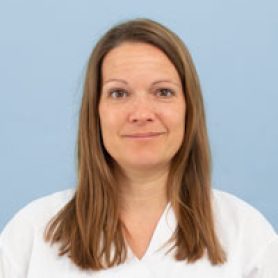
After graduating as a veterinarian in 2006 from the University of Ghent, Geert completed an internship and residency in small animal internal medicine. She remained at the university until 2012, after which she moved to Western Canada. There, she spent several years working in first-line practice, before transitioning back into emergency and referral medicine. This experience gave her a deep understanding of the realities of clinical practice and a strong appreciation for the challenges faced by general practitioners on a daily basis.
Geert has been a Diplomate of the European College of Veterinary Internal Medicine (ECVIM-CA) since 2017 and is (co-)author of several scientific publications. She has more than 15 years of experience in referral practice, including extensive experience in small animal internal medicine, emergency care, and teleconsulting.
However, what truly sets Geert apart is her passion for teaching. She is known for her ability to explain complex topics in a clear, accessible, and practical way, making internal medicine understandable for every veterinarian—regardless of their level of experience. Her teaching style is characterized by clear explanations, additional context, and a strong focus on clinical reasoning.
Having worked in first-line practice herself, Geert strongly believes that the “ideal scenario” is not always achievable. Her goal is not only to teach what the gold standard (Plan A) looks like, but also to equip veterinarians with the tools and confidence to make well-reasoned decisions when they need to rely on Plan B or Plan C.
Her courses are highly valued for their practical approach and direct applicability in daily practice, and her enthusiasm for internal medicine is contagious—she consistently succeeds in inspiring others to develop the same passion.
Driven by this vision, Geert founded OnlineVetTraining (OVT) in 2019, with the aim of providing accessible, high-quality, and clinically relevant education for veterinarians and veterinary professionals worldwide.

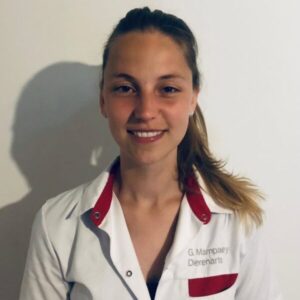
Gitte Mampaey graduated as a veterinarian from Ghent University in 2018, after which she completed a one-year rotating internship in small animal medicine. In 2020, she began her residency training in veterinary cardiology at Ghent University. In 2022, she obtained her ESAVS Certificate in Cardiology (Cert. SAVP Cardiology). In March 2024, she became an EBVS® European Specialist in Veterinary Cardiology (Dip. ECVIM-CA Cardiology). In May 2024, Gitte also completed an additional two-year training program at the Catholic University of Leuven, where she further specialized in human congenital heart diseases and cardiac surgery to better support her patients.
Gitte works at the clinic, where she is responsible for daily consultations and the supervision of students and junior colleagues. She has a particular interest in emergency and critical cardiology patients, as well as congenital heart diseases and interventional cardiology. She therefore prefers to spend much of her time in the operating room, where she performs catheter-based interventions.
In addition to her clinical work, Gitte is passionate about research. She is an author and co-author of scientific publications in journals including the Journal of Veterinary Cardiology, Veterinary Sciences, and the Vlaams Diergeneeskundig Tijdschrift. In the future, she hopes to further pursue research with the goal of obtaining a PhD in cardiology.
In her free time, Gitte enjoys walking in nature with her dog, Zina. During the summer holidays, she can often be found underwater as a recreational scuba diver.
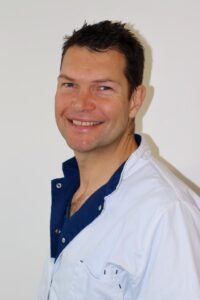
Joachim Proot (ECVS diplomate) graduated as a veterinarian from the University of Ghent in 2001. After graduating, he did an internship in Canada and then worked in England for five years. After obtaining his Certificate in Small Animal Surgery; in 2006 he started working in a secondary care clinic in the United Kingdom and followed his ECVS specialization training there.
Joachim currently works as a soft tissue surgeon at Dierenziekenhuis Barendrecht (Netherlands) and also works as a passionate teacher for the Evidensia Academy (Netherlands). Joachim's interest lies in soft tissue surgery, but in his specialization trajectory he also gained extensive experience in orthopedics and neurosurgery.
Yi completed her veterinary studies and internship in 2013 at the University of Ghent and obtained her specialization in Internal Medicine in 2019 at the University of Giessen (Germany). She subsequently worked as a clinical supervisor in the Department of Internal Medicine at the University of Giessen.
Yi has built an extensive academic career across several renowned university hospitals, including Ghent, Utrecht, and Bern, where she worked as a specialist in Internal Medicine. In 2022, she expanded her clinical experience by working for a year at one of the largest private referral clinics in Hong Kong, gaining valuable insight into veterinary practice outside the academic setting.
Since 2023, Yi has been working internationally as an online consultant for primary care veterinarians, supporting them with challenging internal medicine cases, while also contributing as a lecturer in various educational programs. She remains clinically active through locum work in practices around the world and is involved in volunteer work at local animal shelters.
Yi is deeply passionate about teaching. She is often described as a “walking encyclopedia,” with an exceptional depth and breadth of knowledge. What truly sets her apart, however, is her ability to translate this knowledge into clear, structured, and understandable explanations, making even complex internal medicine topics accessible for veterinarians at all levels.
Her goal is to provide veterinarians with the tools, knowledge, and confidence to independently approach and solve internal medicine cases in daily practice. Thanks to her experience in multiple university hospitals and private clinics across different countries, Yi has developed a strong awareness of how case presentation, disease prevalence, and availability of diagnostics and treatments can vary depending on the setting. This allows her to bring a highly practical, flexible, and globally relevant perspective to her teaching.
Exploring new environments, learning from international experts, and experiencing different cultures have always been central to her personal and professional growth. She continues this journey together with her partner, their cat Nidalee, and their adventurous dog Harper.
Yi schloss 2013 ihr Studium der Tiermedizin sowie ihr Internship an der Universität Gent ab und erlangte 2019 ihre Spezialisierung in der Inneren Medizin in Gießen (Deutschland). Anschließend arbeitete sie als klinische Supervisorin in der Abteilung für Innere Medizin an der Universität Gießen.
Yi baute eine umfangreiche akademische Laufbahn an verschiedenen Universitätskliniken auf. Sie hatte die Möglichkeit, mit renommierten Professorinnen und Professoren ihres Fachgebiets an den Universitäten Gent, Utrecht und Bern zusammenzuarbeiten, jeweils in der Funktion als Spezialistin für Innere Medizin. Im Jahr 2022 arbeitete sie ein Jahr lang in der größten privaten Tierklinik in Hongkong, wo sie wertvolle Einblicke in die Arbeit außerhalb des universitären Umfelds gewann.
Das Erkunden neuer Umgebungen, das Lernen von und Arbeiten mit unterschiedlichen Expertinnen und Experten sowie das Erleben neuer Kulturen waren stets zentrale Elemente ihrer persönlichen Entwicklung. Aus diesem Grund entschied sie sich, gemeinsam mit ihrem Partner, ihrer Katze Nidalee und ihrem abenteuerlustigen Hund Harper die Welt Schritt für Schritt, Land für Land, zu bereisen. Seit 2023 arbeitet Yi online als Beraterin für Erstlinien-Tierärztinnen und -Tierärzte bei komplexen Fällen sowie als Referentin für verschiedene Fortbildungen in ihrem Fachgebiet. Zudem bleibt sie durch Vertretungstätigkeiten in Tierkliniken weltweit praktisch tätig und ergänzt dies durch ehrenamtliche Arbeit in lokalen Tierschutzorganisationen.

I really like that the course is divided into short videos. It makes it much easier to fit the training into a busy day, because you can watch two or three short videos in between other things, instead of having to sit down for a full one-hour webinar.
Most of the explanations are compact, clear, and very practice-oriented. As a first-line practitioner, I really appreciate that the content is directly relevant and useful for the cases we see in daily practice.
Linda
Geert explains everything in a very pleasant and engaging way. Her teaching is clear and practical, and she has a way of making even more difficult topics feel approachable. Very enjoyable to follow!
Vera
I almost wish there were more hours in the day, just so I could take the time to enjoy all the OVT courses properly. The lessons are always clear, focused, and practical, without unnecessary details. I also really appreciate the handouts: they are well structured, easy to use, and perfect to come back to afterwards whenever I want to refresh something.
Heleen
Taking a course at Online Vet Training is a real added value for you as a veterinarian. It is educational, fun, and truly practice-oriented. There is a very extensive range of course material offered in various formats (webinars, podcasts, live sessions, etc.). Additionally, there are a whole host of different specialists who come to share their expertise and are also available to answer questions. Geert Paes herself teaches in a wonderfully engaging way and is always willing to help if you are dealing with a difficult case; I found this to be a huge plus as well. All in all, I would definitely recommend OVT!
Lisa
I really enjoyed following the OVT training program this past year. The modules were clear, practical, and covered so many useful topics. I liked that I could go through the lessons at home in small, manageable moments, which made it easy to keep learning alongside work. It was a very enjoyable and motivating way to refresh my knowledge.
Laura
I found the Internal Medicine course incredibly interesting. It offers real depth across a wide range of internal medicine topics and gives you practical tools to approach more challenging cases with more confidence.
I also really appreciated the extra material available on the website for self-study. It is clear that a lot of work has gone into creating and organizing all of this content, and it makes the course feel very complete. I especially liked that, at certain moments, we could indicate which topics we wanted to explore in more detail. Also, Geert is always available to answer questions.
Paulien
I especially enjoyed the gastroenterology topics, because they focused on cases we see regularly in practice, but that can still be challenging to manage.
In endocrinology, I found the overview of the different diagnostic tests for Cushing’s very useful, especially the clear explanation of their advantages and limitations. The session on diabetes was also very helpful, as these patients can sometimes be quite complex.
Within uro-nephrology, the section on urethral obstruction was a little less new for me, as I see these cases more often and already feel reasonably confident with them. The topic of glomerulopathy, however, was definitely very useful and clinically relevant.
Sabine
Geert is a very enthusiastic speaker and clearly knows what she is talking about. She explains the topics in depth, but always in a way that is useful for everyday practice. I also really appreciate that everything is supported by the latest scientific insights, while still remaining practical. You can take what you learn and use it with your patients straight away. Highly recommended!
Illona Schwarzkopf
I’ve learned from Geert in different ways over the years: first while working with her in practice, where she was my supervisor, and later by following her courses for several years. What I have always appreciated is her calm and clear way of explaining things. She makes complex topics easy to follow, without oversimplifying them.
Her teaching is always up to date and based on the latest literature, but at the same time very practical and relevant for everyday cases. Whether you work in first-line practice or in a referral setting, you come away with knowledge you can actually use.
Geert is also very approachable. There is always room to ask questions, and if something cannot be answered straight away, she makes sure to come back to it later. Her guidance and teaching have really helped me grow further as a veterinarian in practice.
Suzanne
I followed lessons with Geert for three years as part of my Internal Medicine training program in the Netherlands. She has a very pleasant and clear way of teaching, and she manages to make even difficult internal medicine topics much easier to understand.
Geert always takes the time to answer questions properly, and nothing ever feels like too much trouble. Her presentations are clear, well structured, and contain the information you really need in practice.
What also stands out is how passionate she is about internal medicine. That enthusiasm makes her lessons enjoyable to follow, while at the same time giving your knowledge a real upgrade. I have always really enjoyed learning from her.
Sanne
Everything is explained so clearly and calmly. I especially like the webinars and the accompanying handouts, because they make it much easier to go through the material and come back to it whenever needed. I’m so happy with the OVT training programs that I’m now already completing my third trajectory ;-).
Olivia
Geert is an incredibly enthusiastic speaker with a huge amount of knowledge.
The presentations are very well prepared and easy to follow. She shares a lot of practical insights,
and the level of the lectures feels just right: accessible to start with, but still challenging enough to keep you thinking afterwards.
Jessica
A very valuable and high‑quality training program with great support and guidance throughout.
Just make sure you set aside enough study time!
Leen
Because the material is divided into small pieces, it’s really easy to fit it into my day. At home I can watch part of a webinar, on the train I might read through a handout, and between two patients in the clinic I can quickly review a practical case. Super convenient!
Charlotte Tournicourt
I’d really like to thank OVT for the very practical and interesting webinars, podcasts, and protocols!
As an equine vet, OVT has helped me tremendously to deepen my knowledge in small animal medicine.
Honestly, there hasn’t been a week where I didn’t log in to OVT… I wouldn’t want to work without it anymore ;).
Shana Van Wassenhove
Join now and take the next step towards confident clinical decision-making.