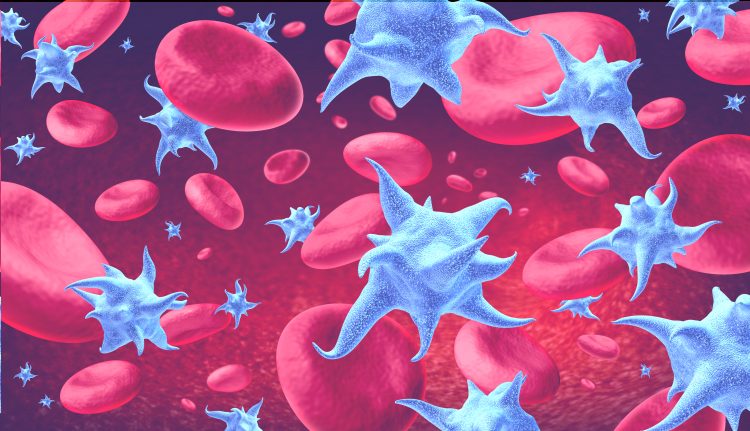
In a previous Vet Info, we discussed abnormalities in red blood cells and white blood cells. In this Vet Info, we will focus on platelets, or thrombocytes.
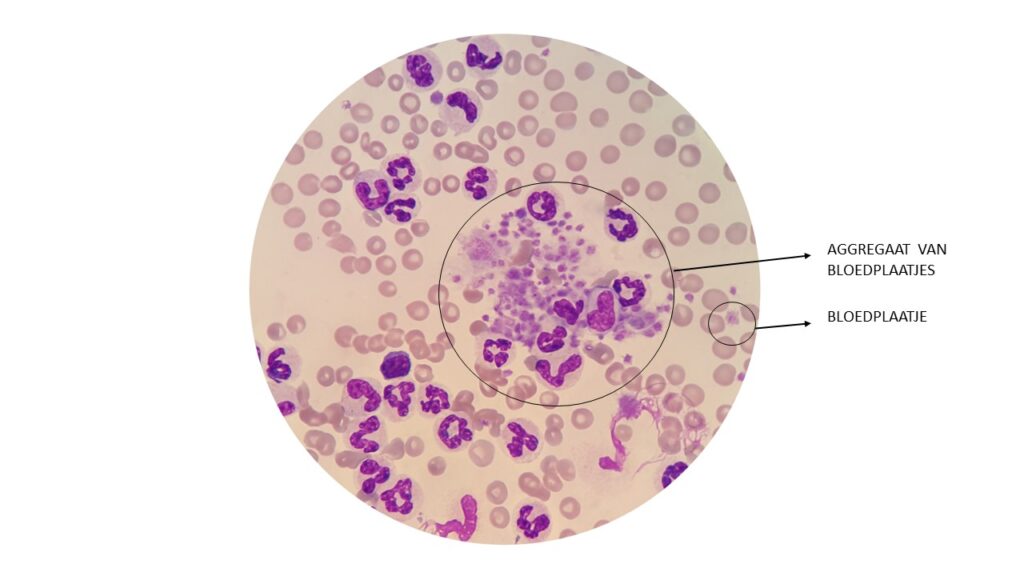
A decreased platelet count, known as thrombocytopenia, is a common finding. However, platelet counts can be falsely low when platelet aggregates are present. For that reason, it is always important to check a blood smear to confirm whether the patient is truly thrombocytopenic.
As a general rule, at least 10 platelets per high-power field, at 100x magnification, should be visible on the blood smear.
Make sure to also examine the feathered edge of the smear. If many platelet aggregates are present there, it is normal to see fewer platelets throughout the rest of the smear.
An increased platelet count is called thrombocytosis.
Macrothrombocytopenia is a hereditary and asymptomatic condition that can be seen in Cavalier King Charles Spaniels, Norfolk Terriers, and Cairn Terriers. It is characterized by abnormally large platelets combined with a decreased total platelet count.
Several drugs can cause thrombocytopenia, including antibiotics such as sulfonamides, cephalosporins, and penicillins; NSAIDs; cardiac drugs such as procainamide and thiazide diuretics; chemotherapeutic agents; methimazole; and estrogen.
Other pathological causes of thrombocytopenia include:
Primary thrombocytosis is characterized by a marked increase in platelet count, usually above 900,000/µL. It is caused by a myeloproliferative disorder, such as myeloid leukemia.
Secondary thrombocytosis usually causes a mild to moderate increase in platelet count, typically below 900,000/µL. It may occur as a result of chronic blood loss, often gastrointestinal; neoplasia, especially carcinomas; chronic inflammation; immune-mediated disease; or glucocorticoid administration.