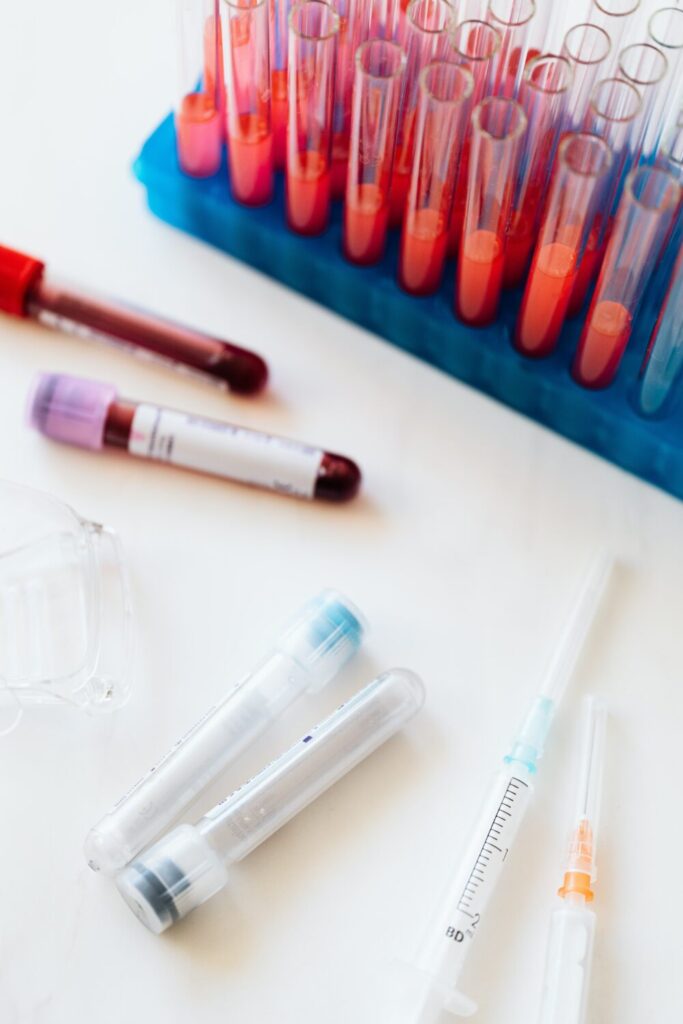
Hematology, or the complete blood count, is one of the most commonly performed blood tests in dogs and cats. It gives us valuable information about the number and appearance of blood cells, as well as the hemoglobin concentration.
Being able to interpret hematology results well can therefore give us important insight into what is happening in our patients.
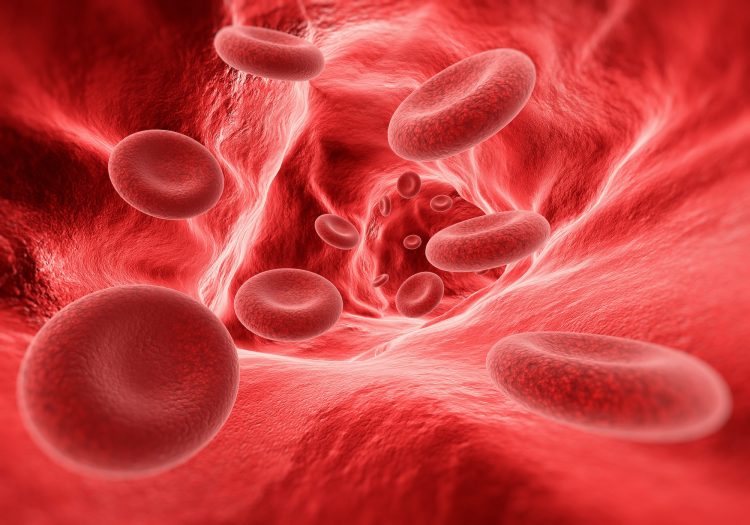
In this Vet Info, we will focus on erythrocytes, or red blood cells. The other blood cells will be covered in a future Vet Info.
Changes in erythrocytes are common. They may involve an increased number of red blood cells, known as erythrocytosis; a decreased number, known as anemia; or changes in cell size, such as microcytosis or macrocytosis.
Changes in cell shape, also called poikilocytosis, can also be seen on a blood smear, but will not be discussed in this Vet Info.
Erythrocytosis
This can be a normal finding in some breeds, such as Greyhounds, some Jack Russell Terriers, and German Shepherds.
It can also be caused by dehydration. In that case, the increased red blood cell concentration is usually accompanied by an increased total protein concentration.
Causes of true erythrocytosis include:
Primary erythrocytosis, also known as polycythemia vera. This can be hereditary or acquired, for example due to bone marrow neoplasia.
Secondary erythrocytosis, which can occur as a result of:
Chronic hypoxia
Increased erythropoietin, or EPO, production, for example due to renal neoplasia or other tumors.
Anemia
A lower hematocrit can be a normal finding in young animals, especially small-breed dogs and cats under 1 year of age, and large-breed dogs under 2 years of age.
Anemia can be acute or non-acute, and regenerative or non-regenerative.
To determine whether anemia is regenerative, look at the absolute reticulocyte count and the blood smear. Regeneration is typically present when the absolute reticulocyte count is above 95,000/µL in dogs or above 60,000/µL in cats. On the blood smear, anisocytosis and polychromasia support regeneration.
Possible causes of anemia include:
Regenerative anemia
Hemolysis This is usually associated with a normal total protein concentration. Additional findings may include hyperbilirubinemia, bilirubinuria, hemoglobinemia, or hemoglobinuria.
Blood loss This is often associated with a decreased total protein concentration, unless the bleeding is peracute or chronically intermittent.
Non-regenerative anemia
Possible causes include:
The early stage of hemolysis or blood loss, before the bone marrow has had time to respond, usually during the first 3–5 days
Endocrinopathies, such as hypothyroidism or Addison’s disease
Bone marrow disease
Chronic kidney disease
Chronic inflammatory disease, also known as anemia of inflammatory disease, or AID
Iron deficiency
The Wintrobe indices, especially MCV, or mean corpuscular volume, and MCHC, or mean corpuscular hemoglobin concentration, can provide additional information.
A microcytic anemia, with a decreased MCV, that is normochromic or hypochromic, with a normal or decreased MCHC, is typical of iron deficiency, anemia of inflammatory disease, and feline infectious peritonitis.
A macrocytic, normochromic anemia, with an increased MCV and normal MCHC, can be seen in cats with FeLV affecting the bone marrow.
Microcytosis and macrocytosis
Microcytosis means that the red blood cells have a decreased MCV, while macrocytosis means that the red blood cells have an increased MCV.
Changes in MCV can sometimes be artefactual, for example due to an old sample, a diluted sample, or agglutination.
Possible causes of microcytosis include:
Familial microcytosis, without clinical signs, seen in several Oriental breeds, such as the Akita Inu and Abyssinian cat
Hyponatremia, for example in Addison’s disease
Iron deficiency or anemia of inflammatory disease
Liver disease, for example portosystemic shunts, where microcytosis is commonly seen
Possible causes of macrocytosis include:
Familial macrocytosis in Toy Poodles
Hypernatremia
Myelodysplasia, mainly associated with FeLV
Regenerative anemia, usually together with a decreased MCHC
Geert Paes
DVM, Dip ECVIM-ca
After graduating as a veterinarian in 2006 from the University of Ghent, Geert completed an internship and residency in small animal internal medicine. She remained at the university until 2012, after which she moved to Western Canada. There, she spent several years working in first-line practice, before transitioning back into emergency and referral medicine. This experience gave her a deep understanding of the realities of clinical practice and a strong appreciation for the challenges faced by general practitioners on a daily basis.
Geert has been a Diplomate of the European College of Veterinary Internal Medicine (ECVIM-CA) since 2017 and is (co-)author of several scientific publications. She has more than 15 years of experience in referral practice, including extensive experience in small animal internal medicine, emergency care, and teleconsulting.
However, what truly sets Geert apart is her passion for teaching. She is known for her ability to explain complex topics in a clear, accessible, and practical way, making internal medicine understandable for every veterinarian—regardless of their level of experience. Her teaching style is characterized by clear explanations, additional context, and a strong focus on clinical reasoning.
Having worked in first-line practice herself, Geert strongly believes that the “ideal scenario” is not always achievable. Her goal is not only to teach what the gold standard (Plan A) looks like, but also to equip veterinarians with the tools and confidence to make well-reasoned decisions when they need to rely on Plan B or Plan C.
Her courses are highly valued for their practical approach and direct applicability in daily practice, and her enthusiasm for internal medicine is contagious—she consistently succeeds in inspiring others to develop the same passion.
Driven by this vision, Geert founded OnlineVetTraining (OVT) in 2019, with the aim of providing accessible, high-quality, and clinically relevant education for veterinarians and veterinary professionals worldwide.
Related Posts
May 28, 2026
The CBC part 3 – Platelets
In a previous Vet Info, we discussed abnormalities in red blood cells and white blood cells. In this Vet Info, we will focus on platelets,...
In our previous Vet Info, we briefly discussed the main abnormalities that can occur in erythrocytes. In this Vet Info, we will focus on leukocytes,...
Hypercalcemia in Dogs and Cats: Causes and Diagnosis
Hypercalcemia is a common finding in clinical practice and ranges from an incidental laboratory abnormality to a clinically urgent condition. The first and most important...
To provide the best experiences, we use technologies like cookies to store and/or access device information. Consenting to these technologies will allow us to process data such as browsing behavior or unique IDs on this site. Not consenting or withdrawing consent, may adversely affect certain features and functions.
Functional
Always active
The technical storage or access is strictly necessary for the legitimate purpose of enabling the use of a specific service explicitly requested by the subscriber or user, or for the sole purpose of carrying out the transmission of a communication over an electronic communications network.
Preferences
The technical storage or access is necessary for the legitimate purpose of storing preferences that are not requested by the subscriber or user.
Statistics
The technical storage or access that is used exclusively for statistical purposes.The technical storage or access that is used exclusively for anonymous statistical purposes. Without a subpoena, voluntary compliance on the part of your Internet Service Provider, or additional records from a third party, information stored or retrieved for this purpose alone cannot usually be used to identify you.
Marketing
The technical storage or access is required to create user profiles to send advertising, or to track the user on a website or across several websites for similar marketing purposes.